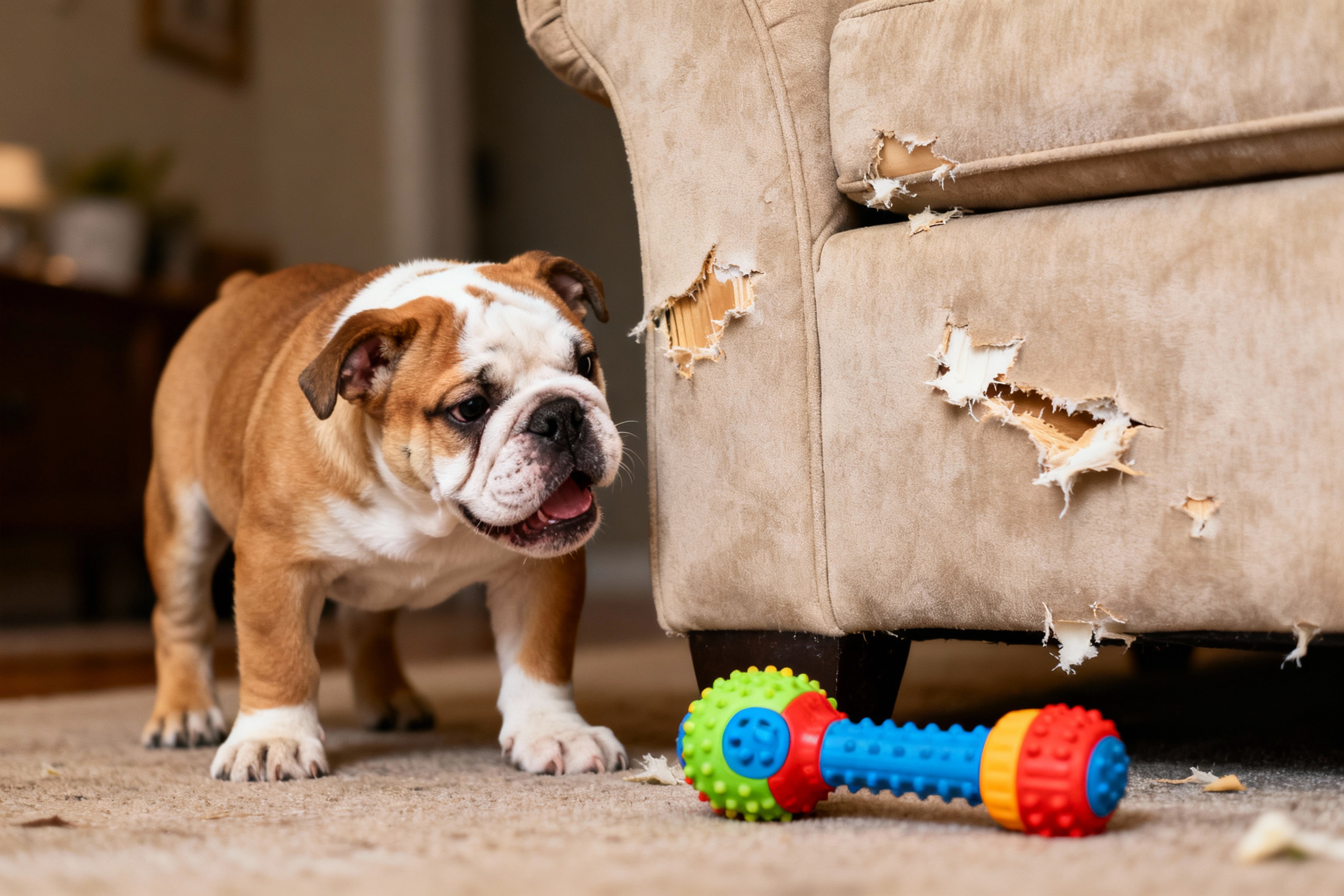
Your bulldog puppy isn’t plotting against your couch (probably). They’re teething, bored, curious, or all three—and your furniture is the unlucky chew toy. The good news?
You can fix it without living in a foam-padded bunker. Let’s stop the gnaw-fest and turn those little jaws toward better choices, fast.
Understand Why Bulldogs Chew (So You Can Fix It)
Bulldog puppies chew for a few main reasons: teething, boredom, stress, and pure curiosity. They don’t know your coffee table wasn’t part of the starter kit.
You need to give them structure, options, and guidance. Key idea: When you know the “why,” the “how to stop it” gets way easier. Think prevention + redirection + consistency.
Teething Timeline 101
Most bulldog puppies teethe between 3–6 months. During this window, their gums feel sore, and biting down helps.
Ice-cold chew toys? A gift from the heavens. Your wood furniture?
Also soothing, unfortunately.
Puppy-Proof Like a Pro
If your bulldog can reach it, your bulldog can chew it. Set them up to win and your furniture will thank you.
- Block access: Use baby gates, exercise pens, or closed doors to limit free-range chaos.
- Hide temptation: Tuck away shoes, straps, remote controls, and anything that smells like you.
- Use deterrent sprays: Apply a vet-approved bitter spray to baseboards, chair legs, and corners. Reapply often.
- Cord safety: Cover cables with cord protectors or run them behind furniture.
Set Up a “Yes Zone”
Create a spot stocked with approved toys and chews.
Put a mat, a bed, and a few high-value chews there. When your puppy heads to that area, praise them like they just discovered electricity.
Offer Better Chew Options (And Make Them Interesting)
If you don’t provide better options, your bulldog will DIY their own entertainment. Spoiler: it’s your table leg. Go-to chew types:
- Rubber toys: Durable, safe, and easy to clean.
Some are stuffable with treats or peanut butter.
- Textured teething toys: Perfect for sore gums. Chill them for relief.
- Rope toys: Great for supervised tug and gentle chewing.
- Edible chews: Bully sticks, yak chews, or dental chews. Supervise and size them correctly.
Make Chews Irresistible
Try this rotation trick:
- Pick 5–7 toys.
- Offer 2–3 each day.
- Rotate daily to keep novelty high.
Stuff a rubber toy with kibble and a smear of peanut butter, then freeze it.
That’s the bulldog version of Netflix.
Redirect Like a Ninja
Catch your pup mid-chew on the furniture? Don’t scold, don’t chase. Keep it calm and efficient.
- Interrupt: Clap once or say “Uh-uh.” Short and sweet.
- Swap: Hand them a high-value chew immediately.
- Praise: The second their mouth touches the right item, celebrate.
Treat if needed.
- Repeat: Consistency wins. IMO, this is where most people give up too soon.
Timing Matters
Bulldog puppies chew more when they’re:
- Tired-but-wired (pre-nap chaos)
- Under-stimulated (bored out of their skull)
- Alone or anxious
Plan chew sessions right after short training or playtime to help them settle. FYI: a 5-minute training session can be more tiring than a 20-minute sniffy walk.
Burn Energy the Smart Way
A tired bulldog chews less.
But bulldogs aren’t marathoners; they’re sprinters with naps in between. Work that brain.
- Short training bursts: Sit, down, touch, leave it. Keep it upbeat.
- Food puzzles: Snuffle mats, puzzle feeders, frozen Kongs.
Mealtime becomes work-time.
- Controlled play: Tug with rules (drop it), fetch in short spurts, gentle wrestle with boundaries.
- Sniff walks: Let them explore. Ten minutes of sniffing = happy brain.
Crate and Playpen Magic
Use a crate or playpen as a calm, safe hangout. Put a long-lasting chew inside and cue a nap.
Bulldogs love routines, so schedule quiet times daily. It’s not punishment—think puppy spa day.
Teach “Leave It” and “Drop It” (You’ll Use Them Forever)
Bulldog stubbornness exists, but they’re food-motivated geniuses when you do this right.
Leave It (Prevents the Chew)
- Hold a treat in a closed fist. Let your pup sniff, lick, paw—say nothing.
- When they pull back or stop trying, say “Yes!” and reward from the other hand.
- Put treats on the floor under your foot; repeat until they glance away on their own.
- Add the cue: “Leave it,” then reward for ignoring.
Drop It (Saves Your Sofa Leg)
- Offer a toy.
When they take it, present a tastier treat.
- Say “Drop it.” When they let go, mark “Yes!” and give the treat.
- Give the toy back. This teaches that dropping doesn’t end the fun.
Practice daily for 2–3 minutes. It compounds fast.
Manage Stress and Separation
Chewing often spikes when puppies feel anxious.
Bulldogs can be clingy, and without guidance they’ll self-soothe on your ottoman.
- Calm departures/arrivals: Keep greetings boring for a few minutes.
- Alone-time training: Start with seconds, not hours. Give a stuffed chew and step out briefly.
- Soothing aids: White noise, a heartbeat toy, or a worn T-shirt can help.
When to Call Reinforcements
If your puppy fixates on chewing despite structure, or shows signs of distress (panting, pacing, barking, drooling), talk to your vet or a certified trainer. Pain, GI issues, or early anxiety can fuel problem chewing.
Not everything is “they’re just being bad.” IMO, rule out medical stuff early.
Consistency: The Secret Sauce
You can’t outsmart a habit with one great day. You need a routine that keeps winning.
- Supervise or contain: If you can’t watch them, crate or playpen with a chew.
- Reapply deterrents: Once a day at first, then taper.
- Reward the right stuff: Chewing their toy? Toss a treat and praise.
- Fix boredom before it starts: Morning sniff, midday puzzle, evening training.
Short and sweet.
FAQ
How long does the chewing phase last?
Most bulldog puppies peak in chewing between 3–6 months during teething. It usually eases by 7–8 months, but some dogs still enjoy chewing for life. That’s fine—just channel it into approved toys.
What deterrent spray actually works?
Bitter apple, bitter cherry, and some aloe-based sprays can help.
Effectiveness varies by dog—some bulldogs are bold and don’t care. Test a small area first, reapply daily at first, and pair with redirection so they learn what to chew instead.
Are bones safe for bulldog puppies?
Skip cooked bones and very hard chews that can crack teeth. Choose puppy-safe, vet-recommended options like rubber toys, softer dental chews, or bully sticks sized for their mouth.
Always supervise and take away small, swallowable ends.
My puppy only chews furniture when I’m gone. What now?
That’s likely boredom or mild separation stress. Use a playpen or crate with a frozen stuffed toy, leave white noise on, and practice super short departures.
Build up gradually. If it persists, get help from a certified trainer or your vet.
Is punishment okay for furniture chewing?
Nope. Yelling or scaring your puppy only teaches them to chew when you’re not around—and it can damage trust.
Interrupt, redirect, and reward the right choice. That combo works faster and sticks longer.
How many chew toys should I have?
Keep 5–7 in rotation, but only offer 2–3 at a time. Swap daily to keep things exciting.
Variety matters: different textures, shapes, and flavors keep your bulldog engaged.
Conclusion
You don’t need to bubble-wrap your living room. You need a plan: puppy-proof smartly, offer irresistible chew options, redirect calmly, work that bulldog brain, and stick to a routine. Chewing is normal, but your furniture doesn’t have to be the victim.
Stay consistent for a couple of weeks and you’ll see the switch flip—chews over chairs, every time.
Leave a Reply