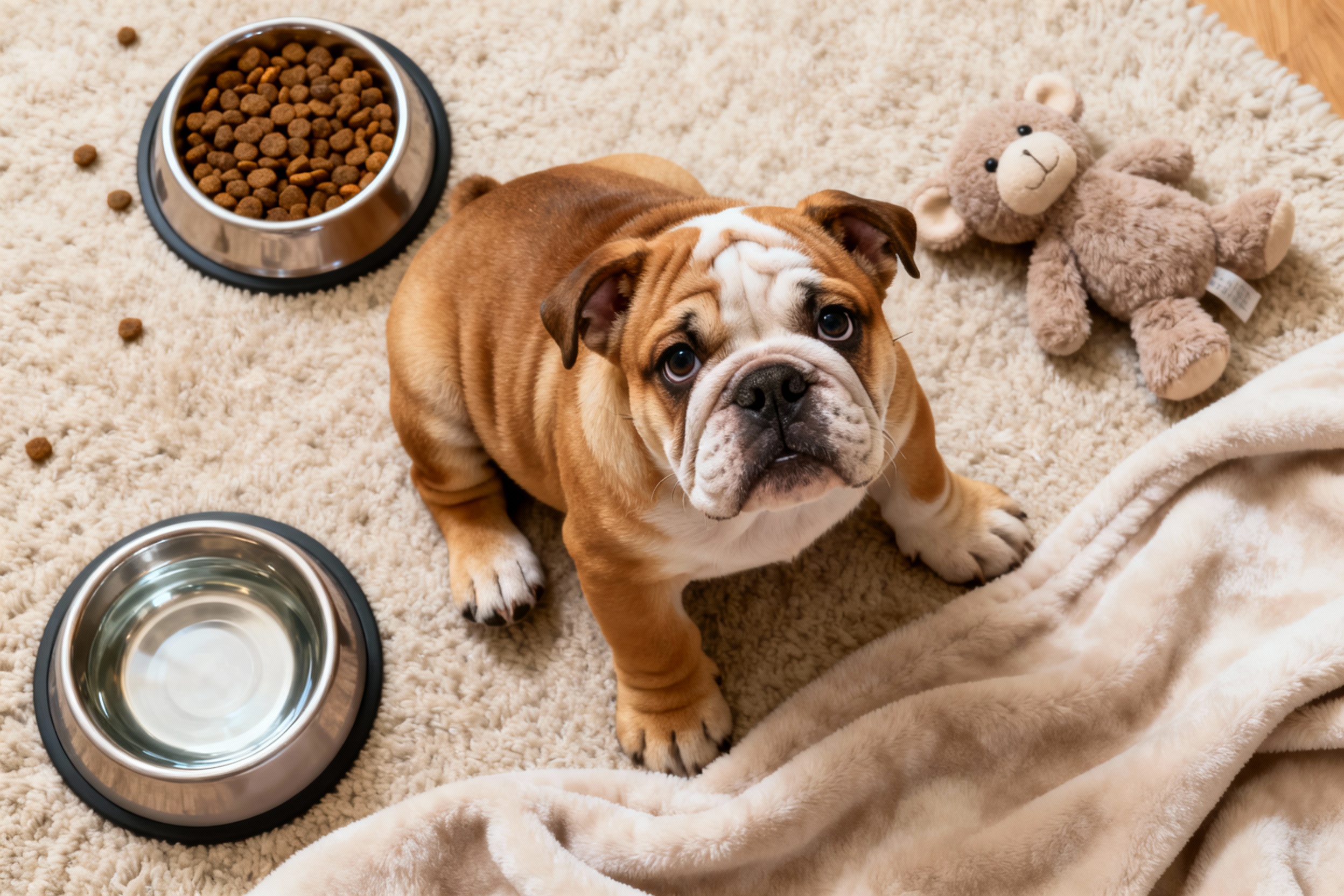
Bulldog puppies are equal parts marshmallow and muscle, with a side of comedian. They nap like champs, waddle like tiny tanks, and charm everyone within a five-mile radius. But they also need thoughtful care from day one.
Let’s get you prepped so your squishy sidekick grows into a healthy, happy couch potato-athlete.
Set Up Your Bulldog Puppy’s Home Base

Your puppy needs a comfy, safe zone. Think crate plus a small playpen area. Bulldogs love structure (and naps), so a dedicated space helps them settle faster.
- Crate size: Big enough to stand, turn, and lie down, but not so big they potty in one corner.
Use a divider if needed.
- Bedding: Soft but washable. Bulldogs drool and snore like tiny lawnmowers, so you’ll do laundry… often.
- Toys: Tough chews, puzzle feeders, and a plush friend. Avoid tiny parts that could break off.
- Temperature: Keep their area cool.
Bulldogs overheat quickly—more on that later.
Baby-Proof Like They’re Part Raccoon
Hide wires, secure trash, and remove plants you can’t identify. Bulldogs explore with their mouths. If it can be chewed, assume it will be.
Feed for Growth, Not Chonk
Bulldogs balloon fast if you let them.
You want growth, not extra fluff. Aim for consistent meals and a high-quality large-breed puppy formula.
- Meals: 3-4 small meals daily until about 6 months, then drop to 2-3.
- Portioning: Follow your vet’s advice, not the bag’s marketing. Adjust weekly based on body condition.
- Water: Fresh, always available.
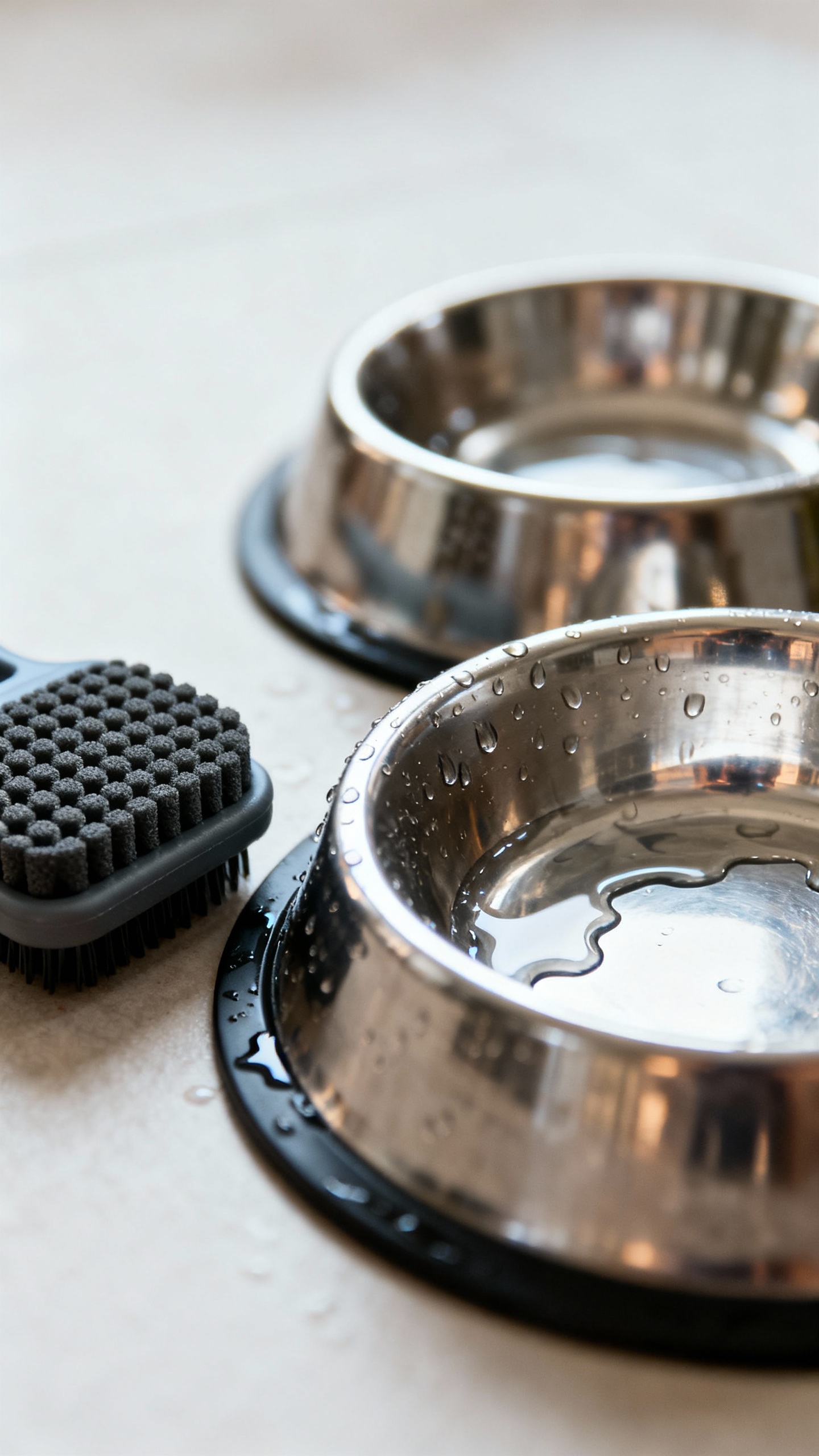
Clean bowls daily—bulldog drool gets… interesting.
- Treats: Keep it under 10% of daily calories. Use kibble as training treats when possible.
Gut-Friendly Choices
Bulldogs can have sensitive tummies. Introduce new foods slowly.
If you see frequent soft stools, gas that clears rooms, or itchiness, talk to your vet about a different protein or a gentle probiotic. FYI: sudden diet changes almost always backfire.
Vet Visits, Vaccines, and Health Must-Knows
Book your first vet visit ASAP. Set up a vaccination plan, deworming schedule, and growth checks.
Catching issues early saves money and stress (for both of you).
- Vaccines: Core puppy series every 3-4 weeks until about 16 weeks. Don’t hit dog parks until fully vaccinated.
- Deworming: Common for pups. Your vet will guide frequency.
- Microchip + ID: Do it now, not “someday.”
- Spay/neuter timing: Discuss breed-specific timing with your vet; Bulldogs have unique anesthesia considerations.
Bulldog-Specific Red Flags
Bulldogs are adorable but come with quirks.
Watch for:
- Breathing difficulty: Snorts are normal; wheezing, blue gums, or collapse are not.
- Skin issues: Red, smelly, or itchy folds signal infection or allergies.
- Joint care: Keep them lean to protect hips and elbows.
If anything feels “off,” call your vet. IMO, better safe than sorry with this breed.
Training That Actually Sticks (and Doesn’t Bore Them)
Bulldog puppies can learn quickly—when you make it worth their while. Keep sessions short and fun.
Food, praise, and a silly voice work wonders.
- House training: Take them out after waking, eating, and playing. Reward the instant they finish. Crate when you can’t supervise.
- Basic cues: Sit, Down, Come, Leave it, Stay.
Five minutes, a few times daily. End on a win.
- Chewing and biting: Redirect to toys. If they chomp your hand, pause play for 10 seconds.
Repeat. They get it.
- Socialization: Expose them to sounds, surfaces, people, and calm dogs. Keep it positive, not overwhelming.
Bulldog Motivation 101
Use high-value treats for new or hard tasks.
For maintenance, switch to kibble or praise. Mix in play breaks. If your bulldog “quits,” the task feels too hard or the reward too boring.
Adjust and try again.
Grooming: Short Coat, Not Low Effort
Yes, the coat is short. No, that doesn’t mean low maintenance. Bulldogs need a routine to avoid funky smells and skin issues.
- Face folds: Wipe daily with a damp cloth.
Dry thoroughly. Use vet-approved wipes if needed.
- Tail pocket: Some Bulldogs have a hidden fold under the tail. Clean and dry it a few times weekly.
- Ears: Check weekly.
Clean only the visible part. Redness or smell = vet time.
- Nails: Trim every 2-3 weeks. If you hear clicks on the floor, they’re too long.
- Baths: Every 4-6 weeks or as needed with a gentle, dog-safe shampoo.
Shedding and Skin
They shed year-round.
A rubber curry brush a few times weekly keeps hair down and skin healthy. For itchiness, check diet, fleas, and folds first.
Exercise Without Overdoing It

Bulldog puppies don’t need marathon walks. In fact, too much impact can stress their joints, and too much heat can be dangerous.
- Daily activity: 2-3 short play sessions plus short sniffy walks.
- Surfaces: Avoid long runs, stairs, and jumping off furniture.
- Weather watch: Heat and humidity are the enemy.
Walk early or late, bring water, and stick to shade.
- Enrichment: Food puzzles, scent games, and easy training drain energy without overheating.
Heat Safety Cheatsheet
Signs of overheating: heavy panting, drooling, weakness, vomiting, or collapse. Move to a cool area, offer small sips of water, and call your vet. Bulldogs don’t “push through” heat.
You must manage it.
Sleep, Schedules, and Sanity
Puppies need 18-20 hours of sleep. Over-tired bulldogs act wild, then crash like a brick. Build a rhythm and stick to it.
- Routine: Consistent wake, feed, potty, play, and sleep times.
- Crate comfort: White noise can help.
A safe chew at bedtime works wonders.
- Night potty: Expect a mid-night break at first. It won’t last forever, promise.
Travel and Alone Time
Practice short separations daily. Give a stuffed Kong, leave for 5-10 minutes, return calmly.
Build up gradually. FYI: prevention beats treating separation anxiety later.
Common Bulldog Puppy Mistakes (Don’t Do These)
Let’s save you some headaches:
- Over-exercising: Joints and breathing can’t handle it yet.
- Ignoring skin folds: Moisture leads to infections fast.
- Free-feeding: You’ll lose track of intake and potty training gets harder.
- Skipping socialization: You’ll pay for it with fear or reactivity later.
- No training plan: Bulldogs don’t “grow out of” habits—they solidify them.
FAQ
How often should I feed my bulldog puppy?
Offer 3-4 small meals daily until about 6 months old. Switch to 2-3 meals after that.
Keep portions measured and adjust every week based on growth and body condition. Your vet can give the best target for your pup’s size and activity.
When can my puppy go to the dog park?
Wait until the full vaccine series wraps up, usually around 16 weeks. Until then, set up playdates with vaccinated, friendly dogs in a controlled space.
It’s safer and honestly less chaotic.
Do bulldog puppies need special food?
Choose a high-quality puppy formula appropriate for medium/large breeds. Bulldogs benefit from balanced calories to prevent rapid weight gain. If you notice constant GI issues or itchiness, ask your vet about different proteins or a limited-ingredient option.
How do I keep my bulldog cool in summer?
Walk during cooler hours, avoid mid-day heat, and offer shade and water.
Use cooling mats indoors. If your pup pants heavily or seems sluggish, stop the activity immediately and cool them down. Overheating escalates quickly with this breed.
Are bulldogs hard to train?
They’re smart but can be stubborn.
Keep sessions short, fun, and food-motivated. Use clear rewards and end on a win. Consistency beats intensity, IMO.
What grooming tools should I have?
Grab a rubber curry brush, soft cloths or vet-approved wipes for folds, a gentle ear cleaner, nail clippers or a grinder, and dog-safe shampoo.
Keep cornstarch or a drying powder on hand for damp folds if your vet approves.
Conclusion
Raising a bulldog puppy feels like managing a sleepy stand-up comedian with a gym membership. Keep them cool, clean, well-fed, and gently trained, and you’ll have a loyal, snoring best friend for years. Build routines, watch their health quirks, and celebrate the small wins.
You’ve got this—and your marshmallow muscle nugget does too.
Leave a Reply