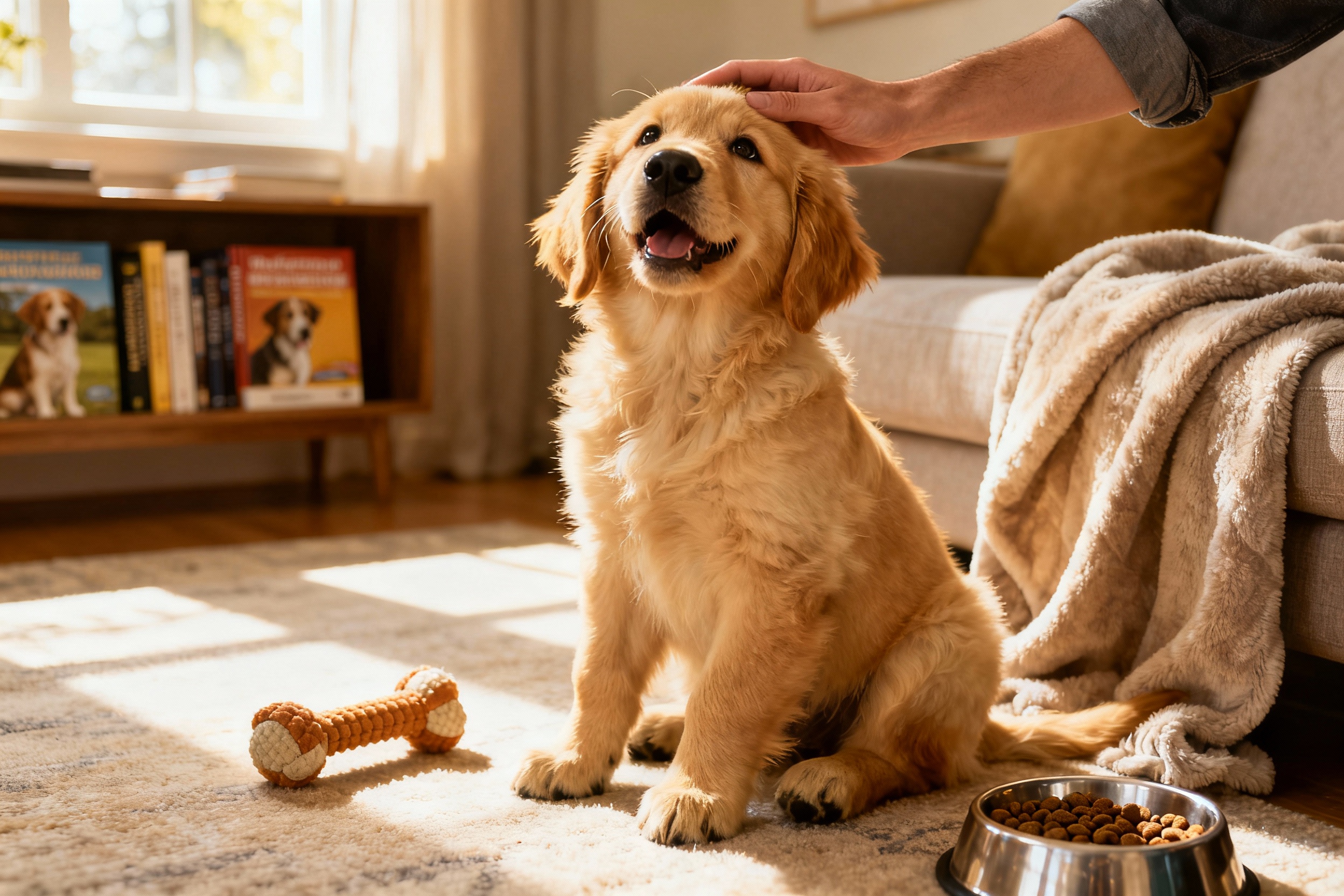
You brought home a golden retriever puppy. Congrats—you just adopted a fuzzy tornado with a heart of gold and the attention span of a popcorn kernel. It will chew your socks, your shoelaces, and possibly your dignity.
But it will also love you more than anything, which makes the chaos totally worth it. Let’s make this ride smoother (and way more fun).
Set Up the Puppy Zone

You need a safe, calm space for your pup to land. Think crate, playpen, and a small area you can puppy-proof.
Golden pups explore with their mouths, so hide wires, shoes, and anything remotely chewable. Crate training? Do it. A crate helps with potty training and prevents destructive boredom. Make it cozy with a soft bed, a chew toy, and a safe blanket.
Keep the crate near human activity so your puppy doesn’t feel exiled to the void.
Gear You Actually Need
- Crate and playpen: Size up for growth, but not so big that potty accidents become comfy.
- Food and water bowls: Stainless steel beats plastic for cleanliness.
- Adjustable harness and leash: Protect that growing neck and teach good habits early.
- Chew toys: Rubber and nylon chews save furniture and sanity.
- Puppy-safe cleaning supplies: Enzyme cleaner is your new BFF.
Feeding Your Goldie Right
Puppies grow like weeds. Your job: fuel the growth without turning them into overstuffed marshmallows. Choose a large-breed puppy food to support bones and joints.
Goldens pack on weight easily, and extra pounds stress hips and elbows.
How Much and How Often
- 8–12 weeks: 3–4 small meals per day
- 3–6 months: 3 meals per day
- 6–12 months: 2 meals per day
Use the bag’s guideline as a starting point, then adjust based on body condition. You should feel ribs with light pressure but not see them. If your pup looks like a furry baguette, scale back.
IMO, skip free-feeding—it complicates potty training and hides appetite changes.
Treats and Chews
Keep treats under 10% of daily calories. Pick soft training treats for fast rewards. For chews, avoid cooked bones and anything that could shatter teeth.
If you can’t dent it with your thumbnail, it’s too hard.

Potty Training Without Tears
Potty training takes consistency, not magic. Take your pup out first thing in the morning, after meals, after naps, after play, and before bed. That’s your baseline.
Praise like they just solved world peace when they go outside. Accidents happen. Don’t scold. Clean thoroughly with an enzyme cleaner and move on. Golden pups want to please, so your calm consistency wins.
Scheduling That Works
- Set timers every 60–90 minutes early on.
- Use a fixed potty spot so the scent and routine become a cue.
- Crate after potty, not before, to encourage holding it.
- Overnight?
Most pups need 1–2 potty breaks for a few weeks.
Training: Brains Before Brawn
Golden retrievers thrive on learning. Use positive reinforcement—treats, praise, and play. Keep sessions short (3–5 minutes) and fun.
Bored puppy = disengaged puppy.
Day-One Skills
- Name recognition: Say their name, reward eye contact.
- Come: Crouch, cheerfully call, reward like crazy when they arrive.
- Sit/Down: Useful for manners and impulse control.
- Leave it/Drop it: Crucial for safety and sanity.
- Go to mat: Teaches calm in busy spaces.
Bite Inhibition (aka Tiny Needle Teeth)
Puppies mouth everything. When bites get too hard, say “Ouch,” stop play, and redirect to a toy. Repeat a million times.
You’ll survive. Your sleeves might not.

Exercise: Not Too Much, Not Too Little
Your golden puppy wants to zoom. Their joints, however, need protection while they grow.
Aim for age-appropriate exercise and avoid high-impact stuff like long runs or repetitive jumps.
What Works Best
- Short walks: A few 10–15 minute strolls, sniffing allowed.
- Play sessions: Tug, fetch on soft surfaces, hide-and-seek indoors.
- Enrichment: Food puzzles, snuffle mats, scatter feeding. Tired brain = calm pup.
FYI: A good rule of thumb is about 5 minutes of structured exercise per month of age, twice daily—plus lots of mental play.
Socialization That Actually Sticks

The window for socialization opens at 8 weeks and narrows by about 16 weeks. Introduce your puppy to sites, sounds, people, dogs, and surfaces—carefully and positively.
Don’t flood them with chaos; build confidence gradually.
Make a Simple Socialization Plan
- Meet friendly, vaccinated dogs in controlled settings.
- Visit new environments: parks, patios, hardware stores.
- Handle paws, ears, mouth daily so vet visits don’t feel like alien abductions.
- Play sound desensitization videos at low volume (thunder, traffic, doorbells).
Keep treats handy. If your pup looks unsure, create space, slow down, and reward curiosity. IMO, one great interaction beats five overwhelming ones.
Grooming: Start Early, Keep It Easy
Golden coats look glorious… and shed like a glitter bomb.
Brush a few times a week to prevent mats and reduce tumbleweeds in your home.
Grooming Basics
- Brushing: Slicker brush and undercoat rake for the win.
- Bathing: Every 4–8 weeks or as needed with puppy shampoo.
- Ears: Clean weekly—goldens love water and ear gunk.
- Nails: Trim weekly or use a grinder. Quick sessions, lots of treats.
- Teeth: Brush 2–3 times a week. Dental chews help, but brushes do more.
Health: Vet Visits, Vaccines, and Red Flags
Schedule a vet visit within a few days of bringing your puppy home.
Bring records, ask about parasite prevention, and set a vaccine schedule. Discuss spay/neuter timing—many vets recommend waiting until growth plates close for large breeds.
Vaccines and Preventatives
- Core vaccines: Distemper/parvo combo and rabies.
- Lifestyle vaccines: Bordetella, leptospirosis, Lyme (depends on area and activities).
- Prevention: Flea/tick and heartworm meds monthly.
Golden-Specific Health Watch
- Hips and elbows: Keep your pup lean and avoid forced stair marathons.
- Skin and ears: Goldens trend allergy-prone—watch for itchiness or redness.
- Bloat risk: Use slow-feed bowls if your pup inhales food; avoid heavy exercise right after meals.
Mindset: Patience, Consistency, and Fun
Your puppy reads your energy. Celebrate small wins and keep routines predictable.
You’ll mess up sometimes. So will they. Laugh, reset, and try again.
That’s the whole game. House rules matter. Decide early: couch or no couch? Jumping allowed? Who feeds and walks when?
Consistency keeps your golden from playing lawyer with your boundaries.
FAQ
When can my golden retriever puppy meet other dogs?
After the first round of vaccines, start with safe, vaccinated dogs in controlled environments. Avoid dog parks until your pup completes their core series. You want positive, low-drama experiences, not chaos.
How do I stop my puppy from chewing everything?
Puppy-proof the environment, rotate 3–4 chew toys, and redirect every single time.
Reward when they choose their toys. If chewing spikes, they might need a nap, a potty break, or a calmer environment.
What’s the best way to handle alone time?
Teach it in micro-doses. Start with 1–3 minutes out of sight, then build up.
Scatter a few treats, give a safe chew, and keep departures/arrivals low-key. Separation comfort grows with practice, not pressure.
How much should my golden puppy sleep?
A lot—like 16–20 hours a day. Zoomies feel intense, but puppies crash hard.
Overtired pups act wild and bitey, so schedule naps to save your ankles.
When should I switch to adult food?
Most goldens switch around 12–18 months. Confirm with your vet, since growth rates vary. Keep them lean during this transition to protect joints.
Do I need pet insurance?
Optional, but worth a look for this breed.
Goldens can face orthopedic issues, allergies, and occasional emergencies. Insurance can soften the financial hit when life throws curveballs.
Conclusion
Raising a golden retriever puppy feels like juggling squeaky toys while someone licks your face. It’s messy, hilarious, and ridiculously rewarding.
Set smart routines, train with kindness, protect those joints, and socialize with intention. Do that, and you’ll end up with a confident, joyful companion who thinks you hung the moon—and honestly, you kind of did.
Leave a Reply