Frenchie puppy teeth feel like sewing needles. They chomp everything—hands, socks, your soul. The good news?
You can teach that adorable gremlin to keep his mouth to himself without killing the fun. Let’s walk through what actually works, why your French Bulldog bites in the first place, and how to fix it before you become a human chew toy.
Understand Why Your Frenchie Bites
Puppies explore the world with their mouths. They nip to play, test boundaries, and get attention.
It isn’t “bad behavior” at first—it’s normal, especially for confident little bulldogs. Teething also makes mouths itchy. Around 3–6 months, they’ll chew to soothe gums.
If you don’t give them a better option, your hand becomes the option. Bottom line: biting is communication. Your job is to teach bite rules without scaring or punishing your pup.
Set Your Ground Rules Early
Decide now: no teeth on skin. Ever.
Clear rules make training faster and cut down on confusion. Use these basics from day one:
- Consistency: everyone in the house responds the same way to biting.
- Short sessions: puppies learn best in 3–5 minute bursts.
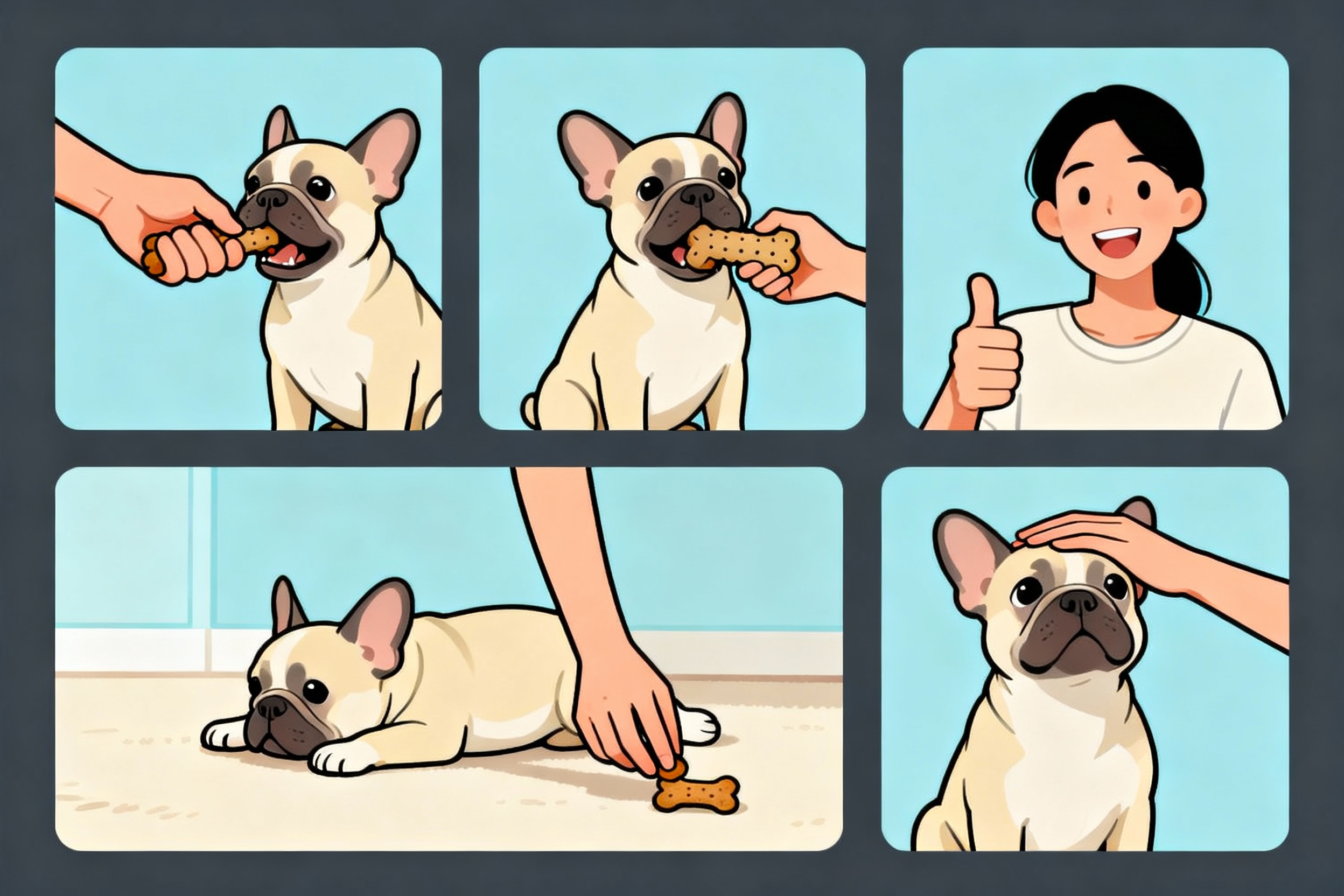
- Reward what you want: calm mouths = praise and treats.
What Not To Do
Don’t yell, hit, or alpha-roll. That just creates fear or more biting. And don’t play rough with hands—if your hands are toys, expect teeth, IMO.
Teach Bite Inhibition (A.K.A.
Gentle Mouth)
Bite inhibition teaches your Frenchie to control pressure. You can shape this fast with a simple “yelp and switch” game.
- Play with a toy. If teeth touch skin, say “Ouch!” in a sharp, brief tone.
No drama.
- Freeze for 2–3 seconds. No eye contact, no movement.
- Redirect immediately to a toy. When they bite the toy, praise and play.
- If they keep targeting skin, take a 20–30 second timeout by stepping away.
Repeat.
It’s boring. It works. You’ll see softer and less frequent biting within a week or two if you stay consistent.
Timing Is Everything
Mark the mistake right when it happens.
If you react 3 seconds late, your puppy connects your response to nothing. Puppies have goldfish memory when they’re excited.
Redirect With Purpose (Chew Toy Strategy)
Your Frenchie needs legal chewing outlets. Stock up on textures and rotate them like a toy sommelier. Good options:
- Rubber chews (Kong-style) you can stuff and freeze
- Soft plush with squeakers for gentle mouths
- Rope toys for tug (teaches rules and burns energy)
- Teething sticks and puppy-safe dental chews
Pro tip: keep 2–3 toys on rotation and hide the rest.
Fresh toys feel magical and pull attention from your hands. FYI, frozen toys help a ton during peak teething.
Teach a “Take It” and “Drop It”
– Say “Take it,” offer toy, let them grab it, then praise. – Trade with a treat while you say “Drop it.” Give the toy back often so they don’t guard. These cues help you redirect biting fast during play.
Channel That Frenchie Energy (So They Don’t Eat You)
French Bulldogs don’t need marathon runs, but they absolutely need brain work.
A bored Frenchie bites more—it’s science and also common sense. Daily menu:
- Two to three short play sessions (tug, fetch, chase-the-toy)
- 10 minutes of training (sit, down, touch, place, name game)
- Food puzzles or stuffed Kongs for meals
- Short sniff-walks and decompression time
Busy mouth + busy brain = fewer bitey moments. Also, a tired Frenchie naps like a potato, which is the dream.
Use Gentle Timeouts (The Right Way)
Timeouts work when you use them as a quick reset, not a punishment. Keep it calm and short. How to do it:
- Teeth on skin?
Say “Ouch,” freeze, then stand up and step behind a gate or out of reach for 20–30 seconds.
- Return and offer a toy to restart play politely.
- Escalate only if needed—if they’re over-aroused, end the session and try again later.
Avoid crating as a punishment. You want your crate to feel like a spa, not jail.
Socialize and Supervise Like a Pro
Frenchies learn bite manners from other dogs who speak “dog.” Good puppy classes and playdates with stable, vaccinated dogs teach limits fast. Look for:
- Short, well-matched play sessions
- Breaks every few minutes to settle
- Calm guidance from you—call them out for a treat, then release to play again
Supervise around kids 100% of the time. Kids move fast and squeal—aka “please bite me” signals in puppy language.
Teach kids to offer toys, not fingers.
Reward Calm Mouths All Day
Catch your Frenchie doing it right. Quietly sneaking a treat to a calm, closed mouth teaches them how to get your attention without teeth. Make it a habit:
- Greeting people? Reward four paws on the floor and calm eyes.
- Chewing the right thing?
Praise and toss another good chew.
- Sitting politely for pets? Jackpot treats and love.
You’ll shape a polite default without constant nagging. IMO, this is the secret sauce.
Common Mistakes That Keep Biting Alive
– Using hands as toys during play – Inconsistent reactions from family members – Roughhousing when puppy is overtired – Skipping nap times (overtired = land shark mode) – Punishing growls (teach them to communicate, don’t mute them) Fix these, and progress gets way easier.
FAQs
When will my French Bulldog stop biting?
Most Frenchie puppies improve between 5–7 months as teething ends and training kicks in.
With consistent redirection and rules, you’ll see steady progress within weeks. Full impulse control continues to improve up to a year, so keep at it.
Should I yelp loudly when my puppy bites?
Use a short, sharp “Ouch,” then freeze. Don’t overact.
Some Frenchies get more excited by dramatic noises, so if your pup amps up, skip the yelp and go straight to the brief timeout and toy redirect.
Is biting a sign of aggression?
Most puppy biting equals play or teething, not aggression. Watch for stiff body language, hard staring, growling when approached, or biting outside of play—call a certified trainer if you see that. For typical puppies, training and structure fix the issue quickly.
What toys are safest for Frenchie puppies?
Choose puppy-rated rubber, soft plush, and rope from reputable brands.
Avoid super hard chews that can crack teeth and skip anything that splinters. Supervise new toys and toss them when they get shredded.
Can I use bitter spray on my hands?
You can, but it’s a Band-Aid, not a solution. Sprays might deter licking, but your puppy still needs to learn boundaries.
Training, redirection, and proper chew outlets do the real work, FYI.
How many timeouts are too many?
If you’re doing more than a few per play session, your pup is overtired or overstimulated. End the session, offer a chew, and let them nap. Try again when they reset.
Conclusion
You don’t need a drill sergeant vibe to stop puppy biting.
You need consistency, smart redirection, and lots of praise for good choices. Keep sessions short, keep toys handy, and keep your sense of humor. Do that, and your Frenchie will retire those tiny needles and turn into the polite, squishy companion you signed up for.
Leave a Reply