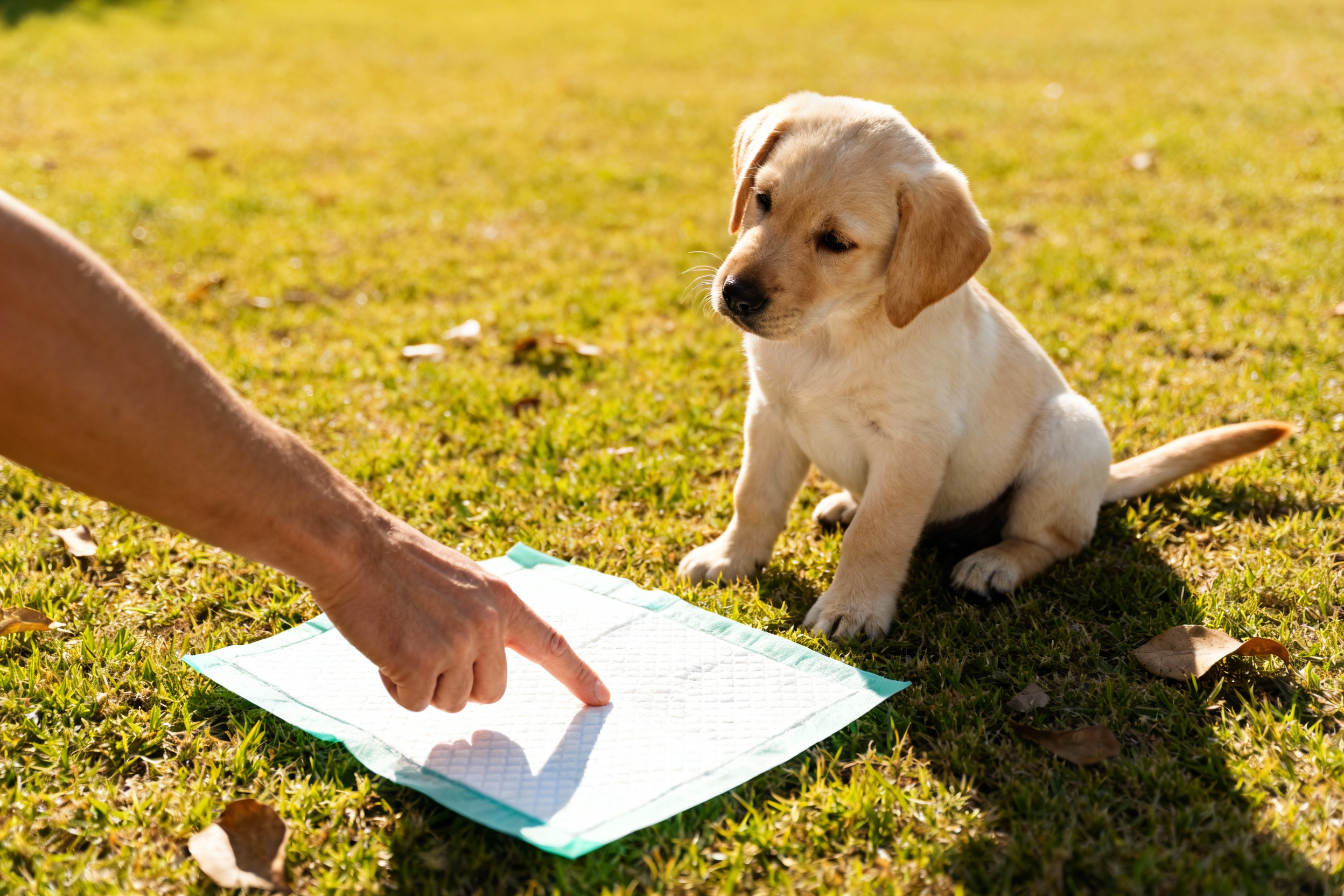
Puppies don’t come with an instruction manual, but your floors wish they did. Toilet training a Labrador Retriever puppy doesn’t need to be a headache or a hazmat situation. Labs are smart, eager to please, and highly food-motivated—aka the dream combo for fast potty success.
Give it a couple of consistent weeks and you’ll wonder why you ever stressed.
Understand Your Lab’s Puppy Plumbing
Labrador puppies have tiny bladders and big appetites. That means frequent bathroom breaks—like, a lot. If you expect too much too soon, you’ll both end up frustrated. General timing rules:
- 8–10 weeks old: Pee every 30–60 minutes when awake
- After meals, naps, and play: Always go outside immediately
- Overnight: One or two potty breaks until about 12–14 weeks
Watch for signals.
Labs do “The Tell” before they go: sniffing, circling, pacing, or bee-lining to a specific corner. If you see it, scoop and go.
Pick a Potty Spot and Commit
Choose a specific outdoor location and use it every time. Your pup will connect the smells with the action and start to “get it.”
Create a cue word
Say a calm, consistent cue like “Go potty” the moment you reach the spot.
Keep your vibe chill. Don’t chatter. Let the cue and the location do the work.
Reward like you mean it
Pay immediately after the deed with tiny, high-value treats and enthusiastic praise.
Payment delayed = lesson derailed. You’re not bribing; you’re reinforcing the behavior you want.
Structure the Day: Routines Win
Consistency feels boring to humans and magical to puppies. A predictable schedule reduces accidents and stress, FYI.
Sample daily rhythm
- Wake up: Straight outside, no detours
- Breakfast: Then outside within 5–10 minutes
- Play/training: Short sessions, then outside
- Naps: Outside immediately after waking
- Evening wind-down: Last potty break right before bed
Feed on a schedule rather than free-feeding.
What goes in on schedule, comes out on schedule. Science. Also, pick up water 1–2 hours before bedtime to help overnight success, IMO.
Crate Training: Your Secret Weapon
Crates speed up toilet training because dogs avoid soiling their sleeping area.
Plus, Labs love cozy dens. How to set it up:
- Choose a crate just big enough to stand, turn around, and lie down comfortably
- Use a comfy mat and a chew toy to make it inviting
- Never use the crate as punishment
Crate-to-potty routine
- Out of the crate → clip leash → go straight to the potty spot
- Say your cue → reward after successful potty
- Then play or training time as the “bonus”
Important: If your pup has accidents in the crate, it might be too big, breaks might be too infrequent, or there’s a medical issue. Adjust, don’t scold.
Supervision and Confinement: The No-Accident Strategy
If your puppy roams, your carpet risks its life. Use supervision or confinement to prevent mistakes.
Active supervision
Keep your puppy in the same room you’re in.
Use baby gates or a leash tether. If you can’t watch closely, use the crate or a puppy-proofed pen with a bed and chew toy.
Leash indoors? Yup
Leashing your pup indoors for short periods helps you spot “The Tell” and redirect quickly.
It’s not forever—just until your pup gets it.
Accidents Happen: Handle Them Like a Pro
Your Labrador isn’t being spiteful—promise. Puppies make mistakes while they learn. Your reactions teach them whether to go near you or hide in the dining room.
Choose wisely. When you catch them mid-squat:
- Interrupt calmly with a “Hey!” or clap—no yelling
- Pick up and go outside immediately
- Reward if they finish outside
When you find a puddle later:
- Clean it with an enzymatic cleaner to remove odor cues
- Skip the scolding—dogs don’t connect late corrections to past actions
Timing Treats and Praise: The Two-Second Rule
Dogs learn from what happens right after they do something. Deliver treats within two seconds of finishing. No kitchen trips for the treat pouch. Keep tiny rewards in your pocket or by the door.
Vary the rewards: sometimes a quick game of tug, sometimes a treat, sometimes a jackpot party when they go in the rain. Make going outside pay big, especially in lousy weather. Because yes, your Lab will try to negotiate in drizzle.
Common Mistakes That Slow Progress
We all make them.
Here’s your cheat sheet to avoid the usual traps.
- Too much freedom too soon: Expand access gradually as your puppy stays clean for weeks
- Inconsistent cues: Pick one potty word and stick to it
- Skipping the morning rush: First thing outside, no snuggles detour
- Overwatering at night: Limit late-evening water
- Not rewarding enough: Pay generously at the start, taper later
What If Progress Stalls?
If your Lab keeps having accidents despite structure, check for medical issues like UTIs or parasites. Puppies can’t tough out infections, and Labs often hide discomfort because they’re busy being sunshine. If the vet gives the all-clear, tighten the routine:
- More frequent trips outside (every 30–45 minutes when awake)
- Reset to crate-and-supervise basics for a week
- Track meals, water, and potty times for patterns
IMO, a three-day “back-to-basics” reset often fixes lingering issues fast.
FAQ
How long does it take to toilet train a Labrador puppy?
Many Labs show reliable progress in 2–3 weeks with consistent routines, but full reliability can take 3–4 months.
Nighttime control comes later than daytime. Progress isn’t linear—growth spurts and teething can cause minor regressions. Keep calm and carry treats.
Should I use puppy pads with a Lab?
If you can get outside regularly, skip pads.
They add an extra step to un-train later. Use pads only if you live in a high-rise or have limited outdoor access, and keep them in one spot. Transition by moving the pad closer to the door, then outside.
What treat works best for potty training?
Small, soft, smelly treats win.
Think tiny bits of cooked chicken, cheese, or pea-sized training treats. You need rapid delivery, not gourmet presentation. Rotate rewards to keep your Lab interested—these dogs love a surprise bonus.
How do I handle nighttime potty breaks?
Set an alarm for one scheduled break in the middle of the night for the first couple of weeks.
Keep lights low, no playtime, straight out and back. Most Labs can sleep through by 12–14 weeks if you limit water before bed and stick to the routine.
My puppy pees excitedly when greeting people. Help?
That’s excitement or submissive urination, not a toilet training fail.
Keep greetings calm, crouch to the side, and ask visitors to ignore your pup for a minute. Take them out for a quick potty first. With maturity and chill hellos, it usually fades.
Is it okay to punish accidents?
Nope.
Punishment creates anxiety and sneaky behavior, not learning. Interrupt only if you catch them in the act, then guide outside. Reward the correct choice.
Training should feel like a clear path, not a minefield.
Conclusion
Toilet training your Labrador puppy boils down to smart routines, quick rewards, and calm leadership. Pick a spot, use a cue, supervise like a hawk, and pay the wins. You’ll trade paper towels for victory laps in no time.
And when it rains? Bring an umbrella and a high-value treat—your future self will thank you, FYI.
Leave a Reply