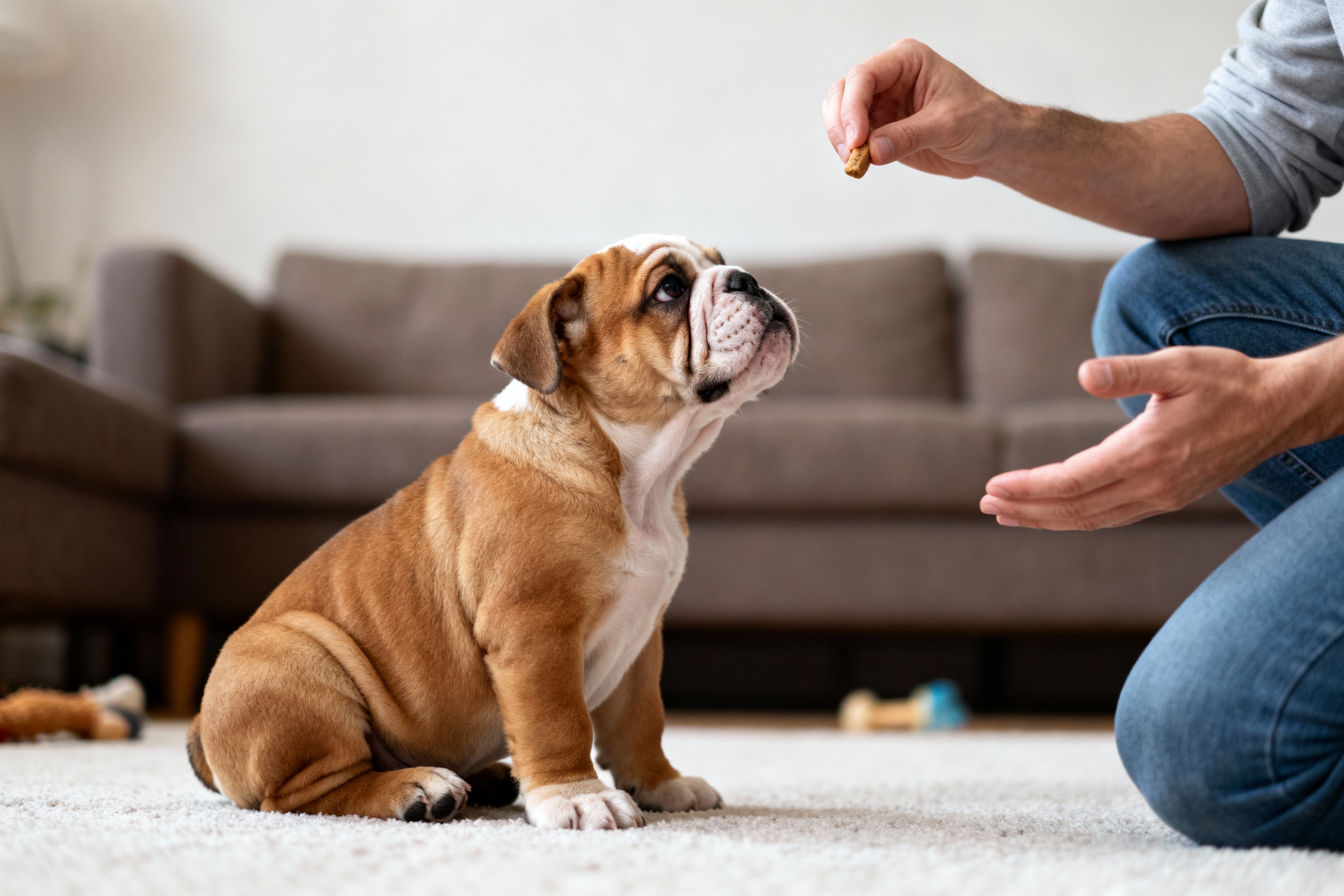
You brought home a 6-week-old bulldog puppy? Buckle up. You’ve got a wrinkly loaf with legs who can melt your heart and also pee on your shoes in under three seconds.
The good news: training starts now, and it’s way easier than you think if you keep it simple. The secret sauce? Consistency, gentle structure, and making good habits ridiculously easy.
First Things First: What 6 Weeks Really Means
At 6 weeks, your bulldog is a baby—like, needs-a-nap-after-10-minutes-of-play baby.
They learn super fast, but they also tire fast and get overstimulated easily. So keep sessions short and sweet. Key rule: focus on bonding and foundations, not strict obedience. You’re building trust and routines that make training later a breeze.
- Session length: 2–3 minutes, a few times a day
- Reward style: tiny treats, warm voice, gentle praise
- Never punish: redirect or ignore unwanted behavior
House Training Without Losing Your Mind
Potty training starts on day one.
Bulldogs can be stubborn, but they love routines. Set a schedule and repeat it like a ritual.
- Take them out: first thing in the morning, after eating, after naps, after play, and before bed.
- Use one spot: take them to the same place each time so the scent cues them.
- Add a cue: “Go potty” in a calm tone right as they start going, then praise like they just won an Oscar.
- Accidents? Clean with an enzyme cleaner. Don’t scold.
They honestly have no idea what you’re mad about.
Crate Training = Your Sanity Saver
A crate helps with potty training and gives your pup a safe den. Bulldogs love cozy spaces—lean into that.
- Size it so they can stand, turn, lie down—no extra room for a “bathroom wing.”
- Make it comfy: soft blanket, safe chew, maybe a worn T-shirt that smells like you.
- Start with the door open and toss treats inside. Then close it for 30–60 seconds while you sit nearby.
Build up slowly.
FYI: 6-week-old pups can’t hold it long. Nighttime might include a potty trip or two. Annoying?
Yes. Worth it? Absolutely.
Socialization That Doesn’t Overwhelm
You’re in the golden window for socialization.
Bulldogs can get cautious if you skip this step, so introduce the world—carefully.
- People: calm adults and gentle kids (supervised). Reward curiosity.
- Sounds: vacuum, doorbell, traffic at a distance, TV. Pair with treats.
- Surfaces: carpet, tile, grass, gravel.
New textures = brain gains.
Health-Safe Socialization
Your pup doesn’t have full vaccinations yet. Choose safe environments.
- No dog parks yet. Hard pass.
- Invite vaccinated, friendly adult dogs with mellow energy.
- Carry your pup in public places or use a clean mat for training sessions.
IMO: confidence now prevents fear later.
Tiny exposures beat “flooding” every time.
Name Recognition, Recall, and Foundation Cues
Start with name recognition. Say their name once (not a chant), and when they look at you, mark it with “Yes!” and treat. Boom—you’re already training.
Micro-Cues to Teach Right Now
Keep it fast and fun.
- Recall (“Come!”): Sit on the floor.
Say “Puppy, come!” clap, and back up. Reward heavily when they waddle over.
- Sit: Lure with a treat over the nose until their butt hits the floor. Say “Sit,” then reward.
Don’t push their rump—let them figure it out.
- Leave it (baby version): Closed fist with treat. Pup sniffs, licks, whines—wait. The moment they look away, “Yes!” and reward with a different treat.
Pro tip: train before meals so food rewards matter more.
Two to three reps at a time = perfect.
Prevent Bulldog-Specific Trouble Early
Bulldogs bring their own quirks. Address them now and you’ll thank yourself for years.
Chewing and Biting
They explore with their mouths. Redirect, don’t scold.
- Keep a rotation of soft puppy-safe chews and rubber toys.
- When teeth hit skin, say “Ouch” calmly, pause play for 5–10 seconds, then offer a toy.
- Frozen wet washcloth (supervised) can soothe teething gums.
Face Folds and Grooming Tolerance
You want a chill adult who lets you clean bulldog wrinkles without drama.
- Touch their paws, ears, and face folds daily while feeding treats.
- Wipe wrinkles gently with a damp cloth, then dry thoroughly.
- Practice short “mock” vet checks: lift lip, look in ears, reward.
Make it a game.
Energy and Overheating
Bulldogs overheat easily even as pups.
- Short play bursts, then naps. Shade and water always.
- Skip intense fetch or long stairs sessions.
- If they pant hard, stop and cool down immediately.
FYI: Snorty noises are cute but watch for labored breathing. When in doubt, slow down.
Feeding, Schedules, and Sleep
Structure solves most puppy chaos.
Your 6-week-old thrives on predictability.
- Meals: 3–4 small meals of a high-quality puppy food. Ask your vet for bulldog-friendly options.
- Water: Available except right before bed to help nights go smoother.
- Sleep: 18–20 hours a day. If your puppy goes gremlin mode, they need a nap, not more play.
Simple Daily Rhythm
Repeat a loop like this:
- Wake up → outside potty → breakfast → 2-minute training → play → nap
- Wake → outside → play → short walk or carry-and-watch world → nap
- Lunch → potty → chew time → nap
- Evening potty → gentle play → crate wind-down → bedtime
Consistency beats intensity. Small, frequent wins build a superstar puppy.
Leash, Harness, and Handling 101
Start gear training early so you avoid bulldog “statue mode” later.
- Harness first: bulldog necks + flat collars = not ideal.
Introduce by letting them sniff, treat, then briefly wear indoors.
- Leash walking: Attach and let them drag it in a safe area while you supervise. Reward for following you a few steps.
- Pick-up practice: Bulldogs are heavy potatoes soon. Teach calm lifting now with treats for stillness.
Common Mistakes to Avoid
We all mess up sometimes.
Avoid these classic traps:
- Too much freedom too soon: Use baby gates and playpens. Manage, then train.
- Shouting or punishment: Makes sneaky puppies, not better ones.
- Overtraining: Short sessions or they tune you out.
- Skipping vet checks: Keep vaccine schedule and ask about bulldog-specific concerns.
FAQ
Is 6 weeks too young to bring a bulldog puppy home?
Many breeders keep puppies until 8 weeks because litter time teaches bite inhibition and social skills. If you already have your 6-week-old, no guilt—just double down on gentle socialization and structured routines.
Consider safe playdates with calm, vaccinated adult dogs.
How long can a 6-week-old puppy hold their bladder?
Not long. Think one hour during the day, maybe two at night with luck. Plan for frequent potty trips and celebrate successes like a weirdo.
It works.
What treats work best for training at this age?
Use soft, tiny, smelly treats—pea-sized or smaller. You can also use part of their meal as rewards. Bulldogs love food (shocking), so keep portions small to protect their tummy and weight.
When should I start formal obedience classes?
Wait until your vet clears you based on vaccines, often around 10–12 weeks.
Meanwhile, you can train at home and do safe, controlled socialization. Early prep makes class a joy instead of chaos.
My puppy bites a lot. Is that normal?
Totally normal.
Redirect to toys, end play briefly when teeth hit skin, and reward calm mouths. Consistency turns a land piranha into a polite potato in a few weeks.
How do I stop whining in the crate?
Make sure they pottied, aren’t hungry, and had a short play first. Start with micro-sessions, feed a few meals in the crate, and give a safe chew.
If they escalate, you started too fast—dial it back and rebuild.
Conclusion
Training a 6-week-old bulldog puppy boils down to routines, tiny sessions, and loads of positive vibes. Keep it short, keep it fun, and stack easy wins. Do that, and you’ll raise a confident, goofy, well-mannered bulldog who chooses good habits because you made them simple.
IMO, that’s the real training flex.
Leave a Reply