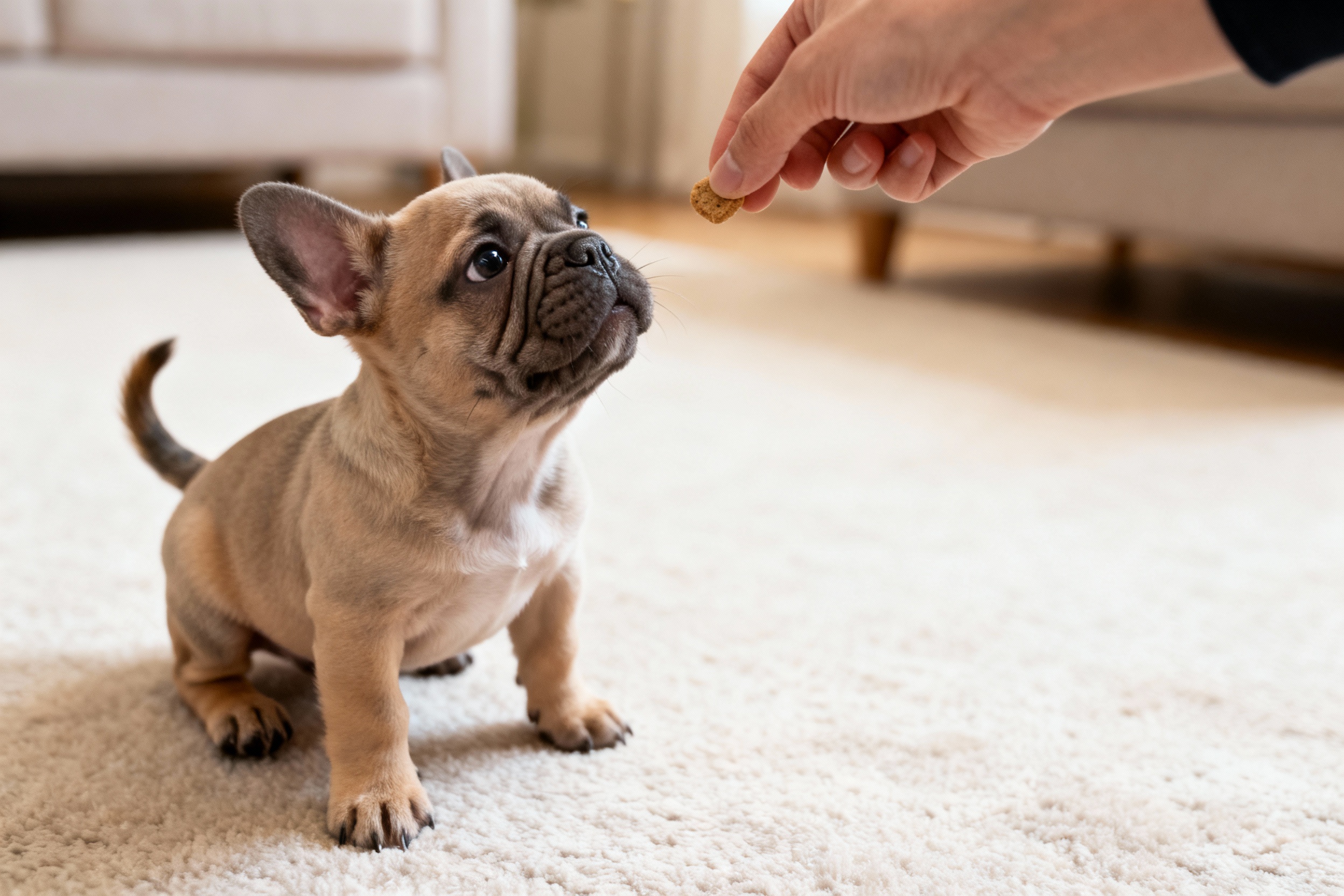
You just brought home a 6-week-old French Bulldog, and your heart is melting… and your carpet is in danger. This tiny potato with legs needs structure fast. Good news: you can start training right now, in tiny, puppy-friendly bursts.
Keep it simple, make it fun, and you’ll raise a confident, well-mannered little clown who actually listens.
Know What a 6-Week-Old Frenchie Can Handle
At six weeks, your Frenchie is basically a baby with a snort. They nap a lot, eat frequently, and explore everything with their mouth. So we keep training short and sweet. Focus on:
- Bonding and name recognition
- Potty foundations
- Crate comfort
- Gentle socialization
- Simple cues: “come,” “sit,” “leave it” (baby versions)
Avoid marathon sessions.
Aim for 1–3 minutes, a few times a day. Quit while your puppy still wants more. Like Netflix, but with treats.
Set Up Your Puppy’s Home Base
Create a safe, cozy zone where your Frenchie can rest, chew, and not redecorate your wiring.
This setup prevents chaos and makes training way easier. Essentials:
- Crate: Small enough to stand, turn, and lie down. Add a blanket, not a duvet. Frenchies overheat easily.
- Playpen: Attach to crate for playtime and potty breaks (with puppy pads as a backup—not a long-term potty plan).
- Chew toys: Soft rubber toys and puppy-safe chews.
Rotate daily so they don’t get bored.
- Water bowl: Heavy, tip-proof, and away from bedding.
Crate = Happy Place
We want your puppy to love the crate, not fear it. Toss a treat inside, let them wander in, praise like you just won a game show. Close the door for a few seconds, open, treat, repeat.
Build up slowly.
Potty Training Without Losing Your Mind
Yes, accidents happen. You’ll handle it. Frenchies like routines, and you’ll win with a tight schedule and fast praise. Go out:
- Right after waking
- After eating or drinking
- After playtime
- Every 45–60 minutes while awake
Pick a spot outside.
Stand still, say nothing. The second they go, throw a tiny party: “Yes!” + treat. Keep nights boring: out, potty, back to bed.
No midnight wrestling matches.
Handling Accidents
Clean with enzymatic cleaner and move on. No scolding. Dogs don’t connect “you yelling at a puddle” with “I peed 2 minutes ago.” They just learn to hide it.
IMO, prevention beats lectures.
Name Recognition and Early Cues
Start with their name. Say it once. When they glance at you, mark it with a happy “Yes!” and give a small treat.
Fast, easy reps.
Three Foundation Games
- Come: Sit a few feet away. Say “Puppy, come!” in your happiest voice. When they toddle over, reward like a maniac.
Keep it short. End before they wander off.
- Sit (lure): Hold a treat to their nose, lift it up and back. When their butt hits the floor, say “Yes!” Treat.
Do not push their rump; we’re not making bread.
- Leave it (intro): Close your hand around a treat. Puppy sniffs, paws, huffs. The second they back off, “Yes!” Give a different treat from the other hand.
Repeat until they learn patience equals pay.
Tip: Keep treats pea-sized and soft. You’re rewarding often, not feeding a roast.
Socialization: Tiny Steps, Big Impact
Your 6-week-old Frenchie sits in a critical socialization window. We want positive exposure, not overwhelm.
Think “gentle preview,” not “front row at a metal concert.” Expose them to:
- Household sounds: hair dryer, vacuum (from a distance), TV
- Surfaces: carpet, tile, grass, a low step
- Handling: touch paws, ears, belly, tail lightly with treats
- People: a few calm adults, not a crowd of squealing children yet
Health and Vaccines FYI
Before your puppy finishes their vaccine series, avoid high-dog-traffic areas. Backyard, carried outings, or clean indoor visits work great. Socialization matters, but so does safety.
Bite Inhibition and Chewing (Because Teeny Piranha)
Puppies bite.
At 6 weeks, they use their mouth to explore everything, including your fingers. Teach them softer bites and better choices. Do this:
- Offer chew toys before play. Redirection beats nagging.
- When teeth land on skin, say “Ouch!” in a calm, surprised tone, pause play for 3–5 seconds.
Resume with a toy.
- Rotate toy textures to satisfy the need to chew.
Avoid tug-of-war intensity yet. Keep it gentle and short. You’re building habits, not biceps.
Feeding, Routines, and Sleep
Frenchie puppies thrive on structure.
Yours will act like a gremlin if you skip naps, IMO. Daily rhythm:
- Meals: 3–4 small meals spaced evenly. Offer water often, but not right before bed.
- Training: 3–6 mini sessions around meals and potty breaks.
- Play: 5–10 minutes, then rest. Overstimulation = zoomies + accidents.
- Sleep: 18–20 hours a day.
Yes, really. Let them crash.
Night Routine
Last potty, short cuddle, lights out. Keep the crate near your bed at first.
If they fuss, give a calm “Shhh” or a gentle touch. No long chats. You’re raising a sleeper, not a nightclub host.
Frenchie-Specific Care Tips
These little bat-eared comedians come with some quirks.
Plan ahead.
- Heat sensitivity: Keep training in a cool room. Watch for panting and take breaks.
- Short snout: Use a flat, wide water bowl and avoid intense exertion.
- Skin folds: Wipe gently with a damp cloth, then dry. Prevent irritation early.
- Harness, not collar: When you start leash basics, choose a well-fitted harness to protect that little neck.
Early Vet and Grooming Habits
Touch paws, open the mouth gently, and pair it with treats so vet visits and nail trims feel normal.
Practice wearing the harness for a minute, then reward and remove. We’re building chill vibes on purpose.
When to Start Obedience Classes
You can start puppy classes as soon as your vet gives the thumbs-up. Look for trainers who use positive reinforcement and keep class sizes small.
Ask about Frenchie experience. Not every trainer understands snort-powered logic, FYI.
Common Mistakes (And Easy Fixes)
- Too long sessions: Your puppy checks out. Fix: 1–3 minutes, then stop.
- Inconsistent potty routine: Accidents everywhere.
Fix: Tight schedule + instant praise.
- Over-socializing: Scary experiences stick. Fix: Calm, controlled exposures only.
- Using punishment: Breaks trust fast. Fix: Manage environment and reward what you want.
- Ignoring sleep: Overtired = naughty gremlin.
Fix: Nap time is sacred.
FAQ
Is 6 weeks too young to start training?
Nope. You’re not teaching calculus. You’re building routines, bonding, and simple cues through play.
Keep it gentle and super short, and you’ll set the stage for everything else.
How often should I take a 6-week-old Frenchie out to potty?
Every 45–60 minutes while awake, plus after meals, play, and naps. At night, expect 1–2 quick outings. The tighter your schedule, the faster they learn.
What treats are best for a tiny puppy?
Soft, pea-sized training treats or bits of boiled chicken.
Avoid anything hard, spicy, or gigantic. You want quick chew-and-go, not a half-hour steak break.
When can I start leash training?
Introduce a harness right away for short, positive sessions indoors. Let them wear it for a minute, treat, remove.
Add a lightweight leash later and practice following you in the living room.
My puppy bites a lot—should I say “No” or tap their nose?
Skip the nose taps. That can create fear. Say “Ouch,” pause play briefly, and redirect to a toy.
Consistency wins here.
Do French Bulldogs need special exercise at this age?
Just short play bursts and exploration. No stairs, no long walks, and definitely no jogs. Protect joints and watch for overheating.
Wrapping It Up
Train your 6-week-old Frenchie with quick sessions, big rewards, and lots of naps.
Nail the basics—potty routine, crate comfort, name recognition, and gentle socialization. Keep things light and fun, and your bat-eared sidekick will grow into a polite little clown who makes you proud. And yes, your carpet will survive—eventually.
Leave a Reply