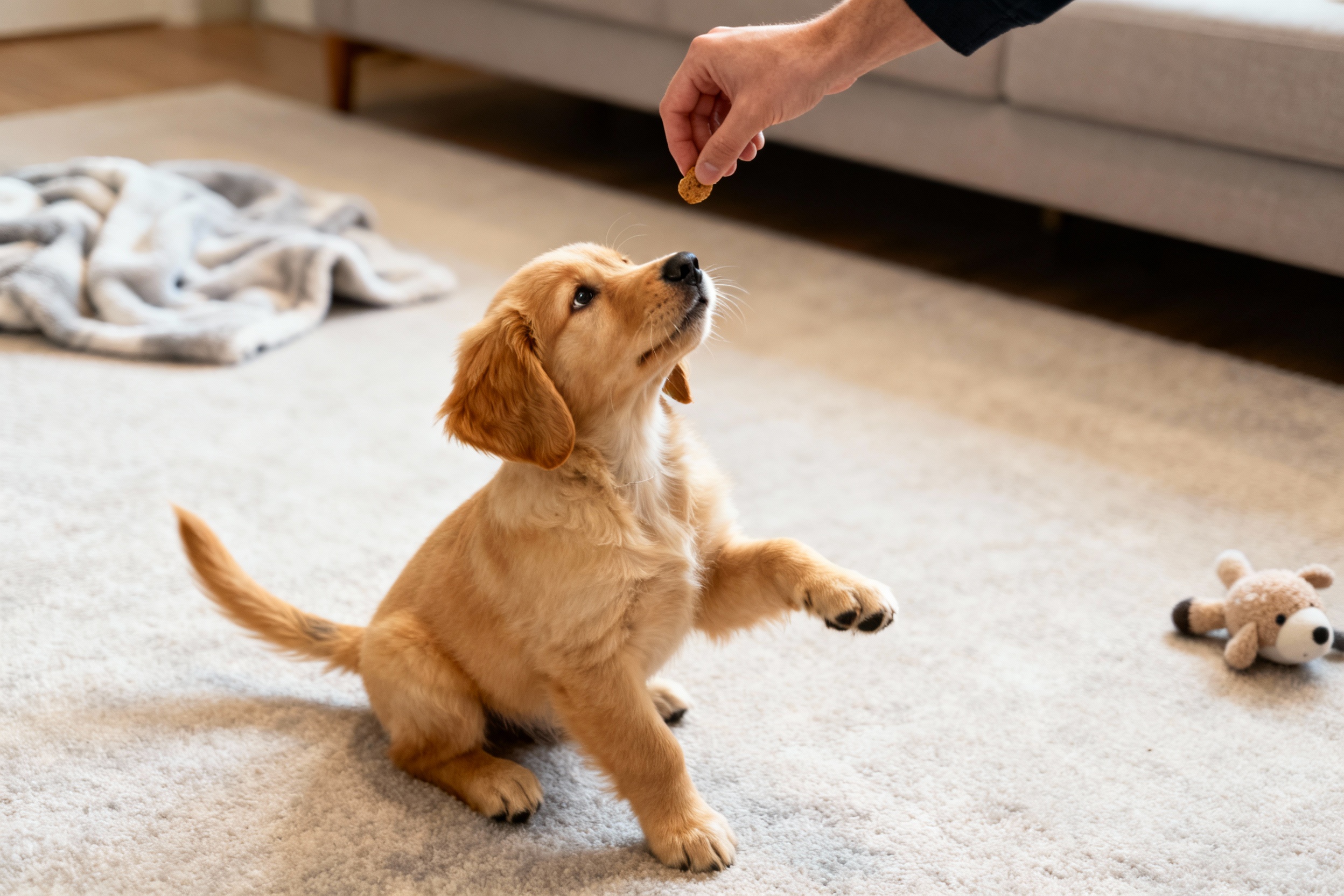
Your 7-week-old Golden Retriever puppy just crash-landed into your life like a fuzzy torpedo with teeth. Congratulations! You’ve got about two minutes before they start chewing your shoelaces, so let’s get right to it.
At this age, training isn’t about perfect obedience—it’s about gentle structure, bite-size lessons, and building a bond that makes your pup think, “Wow, my human is awesome.” They’re tiny, adorable, and distractible. That’s fine. You’ll train in micro-sessions, keep it fun, and celebrate every win like you just won the Super Bowl.
Ready?
Set Up The Home Base

Your puppy needs a safe, predictable space. Think of it as their studio apartment—no roommates, no chaos, just comfort.
- Crate: Get a medium crate with a divider. Make it cozy with a soft blanket and a safe chew toy.
- Puppy zone: Use baby gates or an exercise pen.
Block access to wires, plants, and anything that looks chewable (so… everything).
- Schedule: Feed at the same times daily. Take them out after naps, meals, play, and about every 45–60 minutes.
Potty Spot = Predictable Success
Pick one outdoor spot. Carry your puppy out, stand quietly, and give a simple cue like “Go potty.” When they finish, party time—treats and praise within two seconds.
If nothing happens in five minutes, go back inside and try again in 10–15. No lectures. They don’t speak human guilt.
Crate Training That Doesn’t Feel Like Jail
Crate training should feel like “Netflix and chill,” not punishment.
Keep it sweet and short.
- Toss treats into the crate and let your pup walk in on their own.
- Close the door for 10–30 seconds, then open and reward. Gradually add time.
- Place the crate near you. You’re the comfort object (sorry, plush toys).
Tip: If your puppy cries, wait for a quiet second before opening the door.
You’ll teach them that calm gets results, not a dramatic aria.

Micro-Training Sessions (60–90 Seconds)
At seven weeks, attention spans are hilariously short. So you teach in snack-sized sessions—5–8 times a day. Keep it upbeat and end on a win.
3 Foundation Cues
- Name Game: Say their name once.
When they look at you, mark with “Yes!” and treat. This builds attention, and attention fuels everything.
- Sit: Lure their nose up with a treat. The butt drops, you say “Yes!” and treat.
Keep it chill—no drilling.
- Come: Crouch low, clap gently, say “Puppy, come!” Reward like a maniac when they arrive. Make coming to you the best party ever.
Handling and Confidence
Your vet and groomer will thank you later. Start now:
- Touch ears, paws, and belly gently while feeding small treats.
- Hold the collar briefly, treat, release.
Repeat.
- Short car rides with treats after. No big adventures yet—just “car = snacks.”
FYI: Keep sessions playful. If your pup seems overwhelmed, stop and cuddle.
Confidence beats perfection.
Bite Inhibition and Chewing Without Tears
Puppies bite. They’re not being “bad.” They’re exploring and teething. Your job: teach softness and provide legal chew outlets.
Redirect, Don’t Scold
When teeth land on skin:
- Say “Ouch!” softly (no drama), pause play for 3–5 seconds.
- Offer a chew toy immediately.
Praise when they chomp the toy.
- Rotate chews: frozen washcloth, puppy-safe rubber toys, soft plush with supervision.
IMO: Harsh corrections at this age create confusion. Calm and consistent beats “alpha” nonsense every time.

Socialization (The Right Kind)
You’re not throwing a puppy into a crowd. You’re curating gentle, positive experiences.
At seven weeks, they can meet your world in small doses.
- People: Calm adults and teens. Treats appear when new people appear.
- Surfaces: Grass, carpet, tile, a rubber mat. Reward for standing confidently.
- Sounds: Doorbell, hair dryer from a distance, gentle traffic noise.
Pair with treats.
- Dogs: Only healthy, vaccinated, puppy-friendly dogs you trust. Skip dog parks for now.
Health and Safety
Until your vet finishes vaccines, avoid public floors with heavy dog traffic—pet stores, sidewalks, parks. You can still socialize safely: carry your pup, use a stroller, or hang out in your yard and watch the world go by with snacks.
Leash Basics Without the Battle

Leashes feel weird at first.
Start simple.
- Clip the harness indoors and reward. Let them drag a lightweight leash for a minute under supervision.
- Practice “follow me” in the hallway with treats. Walk backwards a step; treat when they come along.
- Keep sessions super short.
Stop before they flop like a pancake.
Pro move: Use a Y-front harness. It protects growing joints and avoids neck strain.
Routines Make Everything Easier
Structure = sanity. You don’t need a spreadsheet—just a daily flow.
- Wake up, straight outside to potty.
- Breakfast, then outside again.
- Micro-training session (name, sit).
- Play, then nap in the crate.
- Repeat the cycle all day: potty, play, train, nap.
Golden rule: A sleepy puppy is an angel.
A bored puppy is an interior designer with teeth.
Common Mistakes To Dodge
- Too much freedom too soon: Close doors. Use gates. Prevent accidents before they happen.
- Overtraining: If your pup wanders off mid-session, you trained too long.
Keep it zippy.
- Inconsistent cues: Pick one word for each behavior. Everyone in the house uses the same cue.
- Late rewards: Treat within two seconds. Timing matters more than treat size.
- Punishing accidents: Clean with enzymatic cleaner.
Move on. Teach, don’t shame.
FAQ
How often should a 7-week-old Golden Retriever puppy sleep?
A lot. Expect 18–20 hours a day.
Puppies play hard for 20–30 minutes, then crash. Respect nap time. Over-tired puppies get mouthy and wild—like tiny drunk pirates.
If you see zoomies followed by tantrum-biting, it’s probably nap o’clock.
What treats are safe for training at this age?
Use tiny, soft treats that you can break into pea-sized bits. Boiled chicken, soft training treats, or kibble mixed with a few “jackpot” pieces work great. Keep total treat intake small and balance with meals.
Stomach upset = no fun for anyone.
When do I start real walks?
Keep it light until vaccines wrap up per your vet’s schedule. For now, do short, safe backyard or driveway strolls and indoor leash games. Focus on “follow me” and confidence.
Distance isn’t the goal—positive experiences are.
How do I stop whining in the crate at night?
Put the crate near your bed. Offer a last potty break, a safe chew, and a soft night light. If they cry, wait for a quiet beat before opening.
Take them out calmly for a quick potty break, then back to bed. Consistency tonight equals sleep tomorrow.
Is 7 weeks too young for training classes?
Group classes often start at 8–10 weeks after the first vet visit. Meanwhile, you can begin everything at home—name game, sit, handling, and socialization field trips where your pup stays off public floors.
Ask your vet about a well-run puppy kindergarten asap.
How often should I feed my puppy?
Feed three to four small meals per day on a consistent schedule. Goldens love food (shocker), so measure portions and don’t free-feed. Regular meals help with potty training and prevent the “I’m starving” drama at midnight.
Wrapping It Up
Training a 7-week-old Golden is about bite-sized wins, not boot camp.
Keep sessions short, keep your vibe calm, and celebrate every tiny success. In a few weeks, you’ll see a confident, curious pup who loves learning with you—because you made it fun. FYI: the shoes won’t train themselves, so, uh, hide them.
IMO, that’s the real pro tip.
Leave a Reply