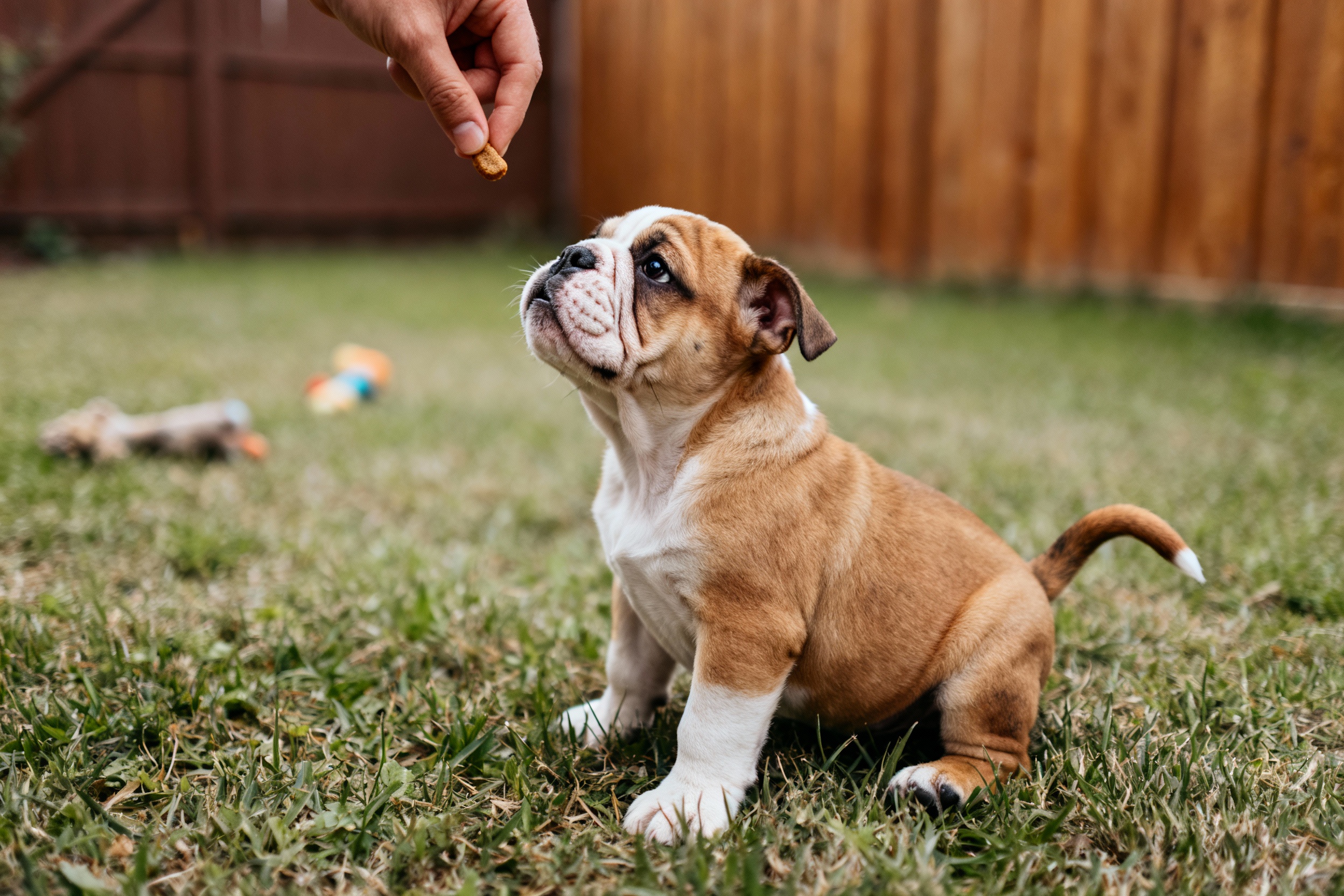
Your 8-week-old bulldog puppy just crash-landed into your life like a snorting, wrinkly potato with paws. Cute? Absolutely.
Chaos? Also yes. The good news: you can set great habits right now without turning your living room into a war zone.
Let’s build a training plan that works with bulldog brains, not against them.
Know Your Bulldog: Training the Stubborn Sweetheart
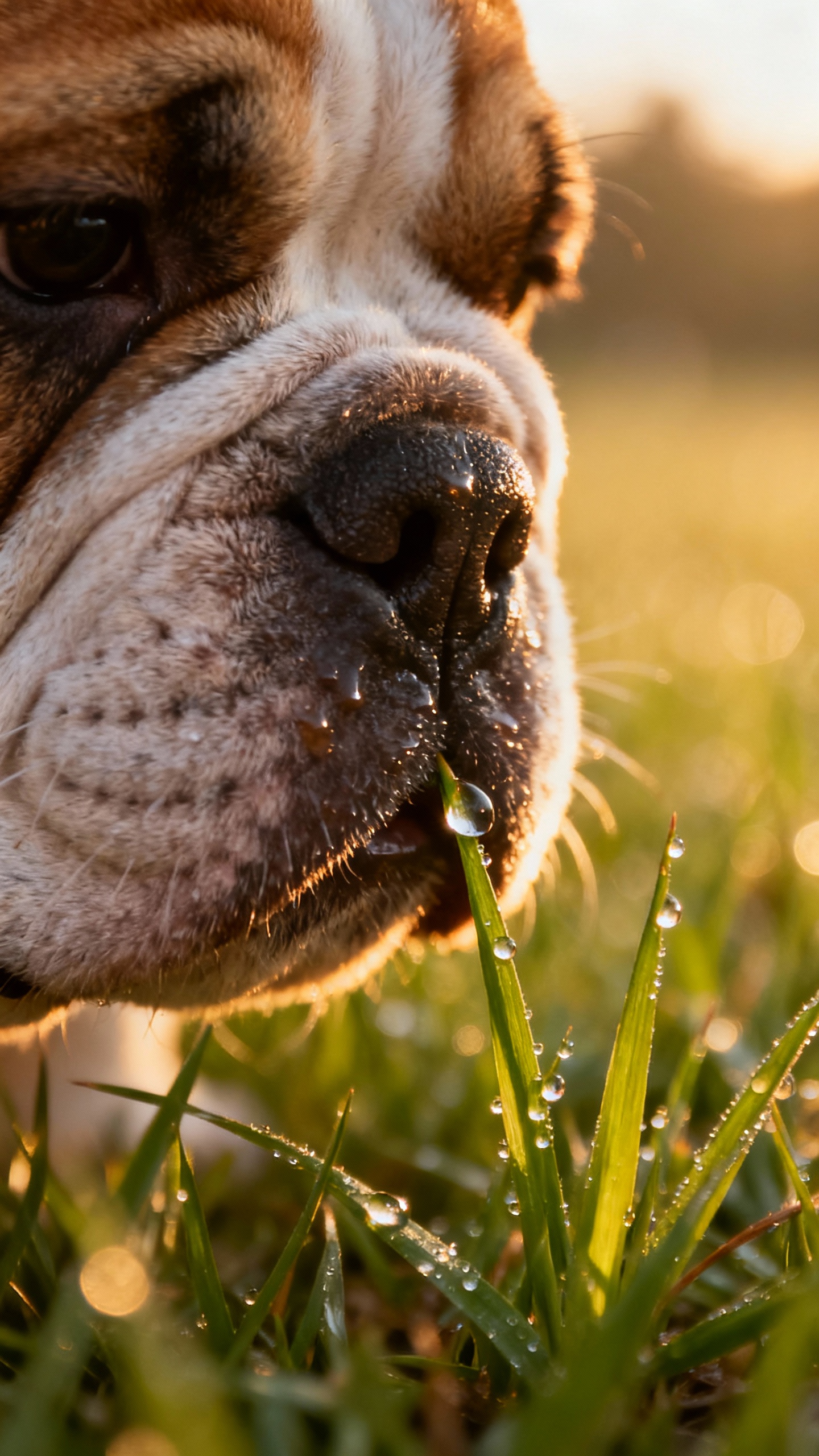
Bulldogs learn fast when you make it rewarding and fun. They also get bored faster than your Wi-Fi drops during a storm. So keep sessions short, upbeat, and consistent. Big tip: bulldogs overheat.
You must train in short bursts, in cool spaces, and give water breaks. That adorable snore? It comes with real respiratory limits.
Work with that, not in spite of it.
House Training Without Tears (or Puddles)
Potty training a bulldog is 50% timing and 50% vigilance. At 8 weeks, your puppy can’t hold it long. You’ll need a routine and a plan. Start here:
- Take your puppy out first thing in the morning, after meals, after naps, after play, and before bed.
- Use one potty spot outside so the scent triggers the behavior.
- Say a cue like “Go potty” while they’re doing it, then celebrate like they nailed a TED Talk.
- Reward immediately with a tiny treat and praise.
Crate training boosts success. Bulldogs usually love a cozy den.
Pick a crate just big enough to stand, turn, and lie down. Too big and they’ll party on one side and potty on the other. Not ideal.
Accidents Happen (Clean Up Like a Pro)
Skip scolding.
It confuses puppies and slows progress. Blot, then use an enzymatic cleaner to erase the scent. If your puppy keeps choosing the same corner indoors, block access or keep a leash on them during indoor hangouts.
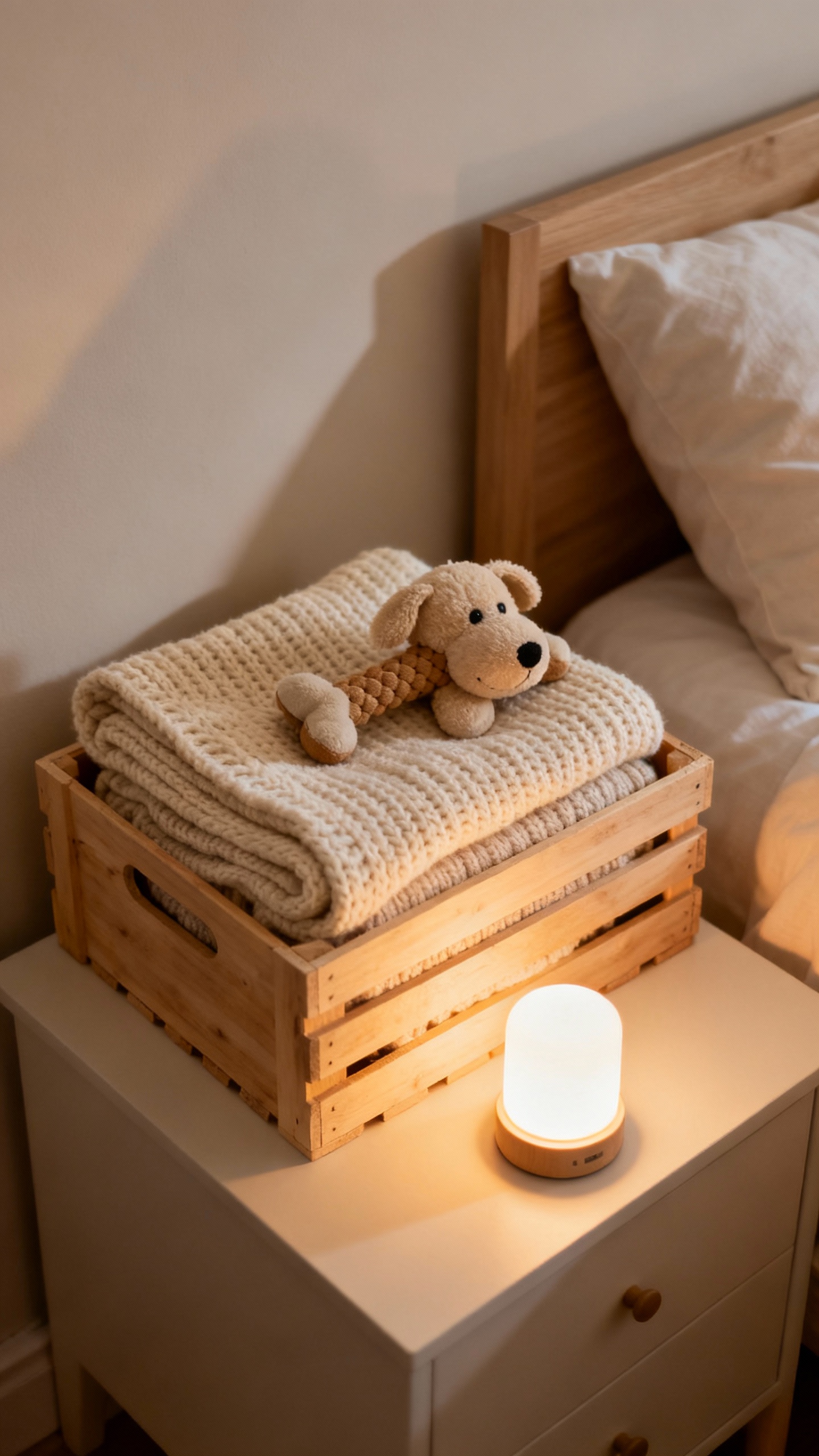
Crate Training That Doesn’t Feel Like Jail
Crate time should feel like a safe nap cave, not punishment.
Feed meals in the crate with the door open at first. Then close it for 1–3 minutes, release, and act normal—no dramatic reunions. Build duration slowly:
- Start with 3–5 minute sessions several times per day.
- Offer a safe chew (bulldog-appropriate) so the crate equals “good things happen here.”
- Keep max crate time for an 8-week-old to roughly 1–2 hours during the day, with plenty of breaks.
Nighttime Strategy
Put the crate in your bedroom so the puppy hears you. Set one alarm for a quick 2–3 a.m. potty run the first week.
You’ll phase it out as they mature. FYI: Bulldogs love routine like we love coffee.
Daily Schedule: Structure = Sanity
Predictability helps puppies relax. Here’s a simple rhythm that works:
- Wake up, straight outside, potty, reward.
- Breakfast in the crate.
Quick potty afterward.
- Short play/training session (5 minutes tops). Nap in the crate.
- Repeat the play-potty-nap cycle all day.
- Dinner, potty, calm play or cuddle, bedtime potty, sleep.
Meals matter. Feed a vet-recommended puppy formula on a schedule, not free-fed. Regular meal times = predictable potty times.
IMO, that’s the secret sauce for house training.
Basic Training: Keep It Short, Sweet, and Rewarding
At 8 weeks, attention spans last about 30 seconds. So stack tiny wins.
Names and Attention
Say their name once. When they glance at you, mark it (“Yes!”) and treat.
Do that in three 1-minute bursts daily. A reliable name response makes everything else easier.
Sit and Down
Use a treat to lure the sit, then the down. Reward every tiny step.
Don’t push their hips—luring keeps it positive. Bulldogs like to bargain; make the deal worth it.
Come When Called
Start indoors. Say “Puppy, come!” in a happy voice, jog backward, and reward generously when they trot over.
Repeat 3–5 times, then stop before they wander off. Quit while you’re ahead—bulldog motto.
Leave It and Drop It
Lifesavers for a breed that believes every sock belongs in their mouth.
- Leave it: Cover a treat in your fist. Puppy sniffs, you wait.
The second they pull back or look away, say “Yes,” then give a better treat from your other hand.
- Drop it: Trade the item for a tastier treat. Say “Drop,” offer the trade, and give the item back sometimes so it’s not always a loss.
Training rules to live by:
- Three to five mini-sessions per day, 3–5 minutes each.
- End while they still want more.
- Use extra-soft, tiny treats—bulldogs can be food-motivated, so leverage that.
Socialization: Calm Confidence Beats Overexposure
You don’t need chaos; you need controlled experiences. Bulldogs can become wary if they miss this window (roughly 8–16 weeks), so start now—safely.
Safe Exposures Pre- and Post-Vaccines
Before full vaccinations, avoid high-traffic dog areas.
Instead:
- Invite vaccinated, well-mannered dogs to your home or visit trusted yards.
- Carry your puppy in public spaces for sights and sounds: strollers, bikes, delivery trucks.
- Play recordings of common noises quietly during calm moments.
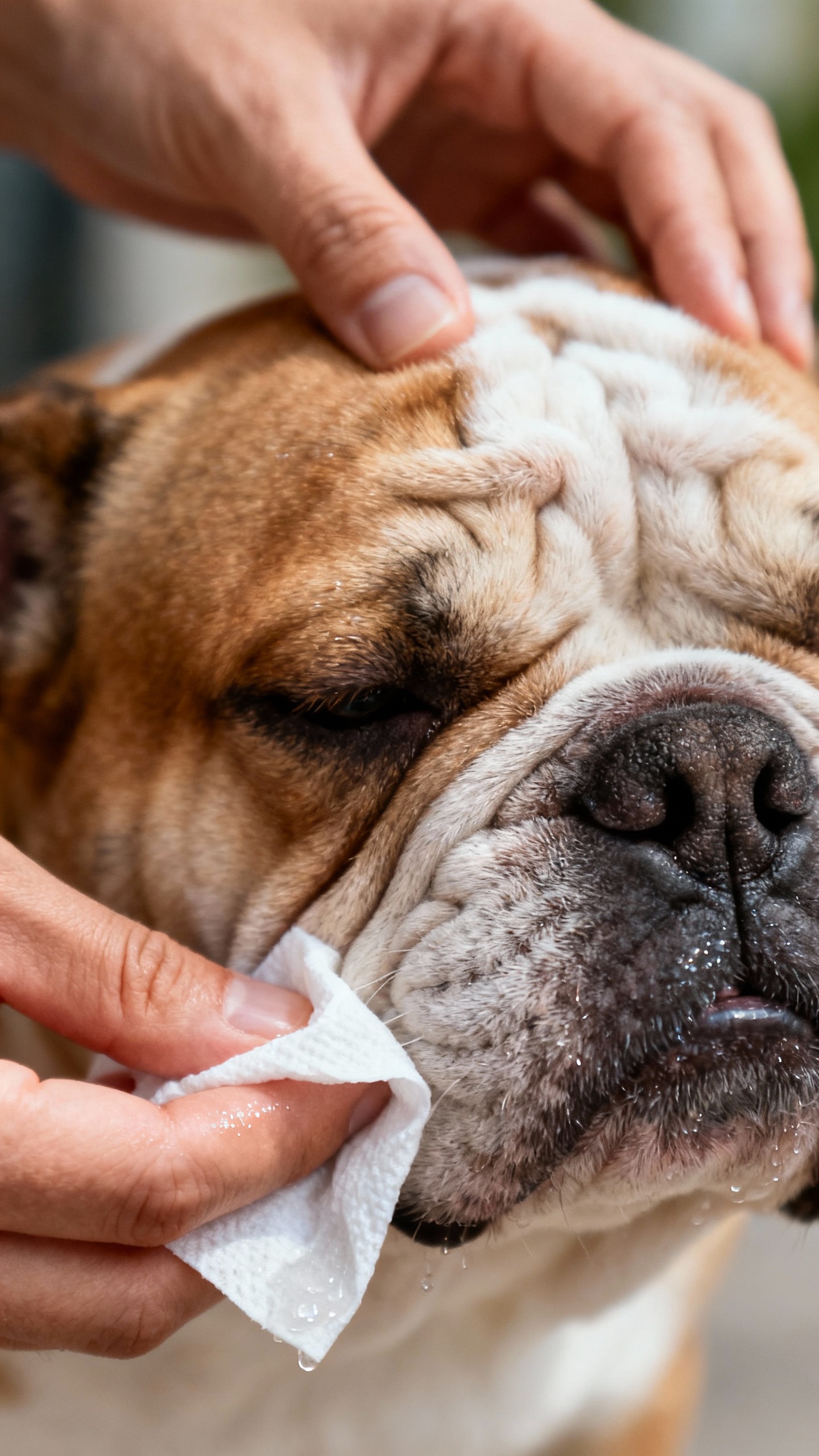
Grooming practice matters. Touch paws, ears, tail, and folds gently while feeding treats. Clean facial folds daily with vet-approved wipes and dry thoroughly. Bulldogs can get funky fast—prevent, don’t panic.
Leash Skills and Energy Management
Your 8-week-old doesn’t need big walks.
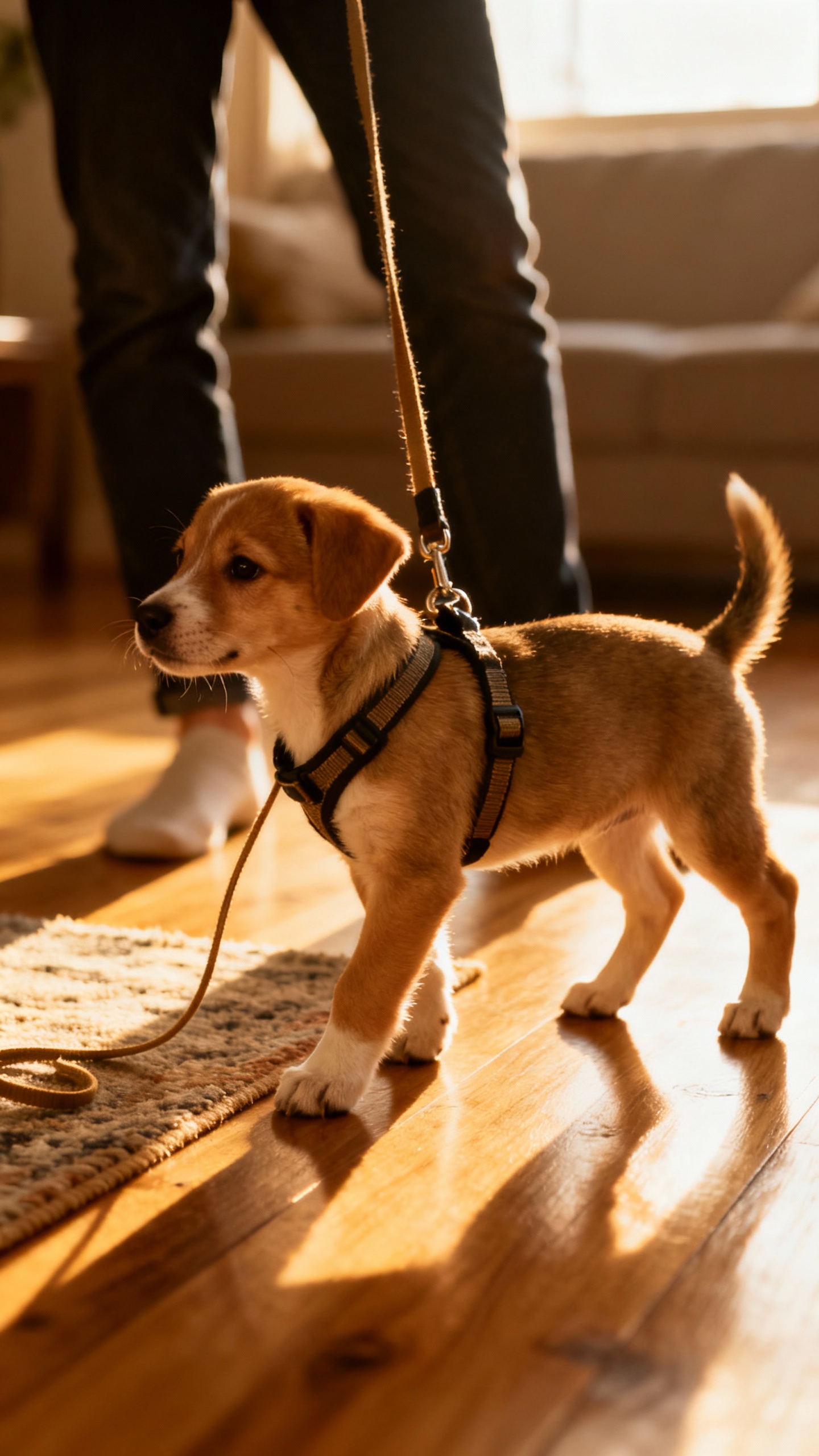
Save joints and avoid overheating. Focus on leash manners in the house and yard.
- Clip the leash at mealtimes so it feels normal.
- Practice following you for 5–10 steps, reward for a loose leash.
- Stop moving if they pull. When the leash loosens, move again.
Simple cause and effect.
Burn mental energy. Food puzzles, snuffle mats, and short training games beat long walks. Bulldogs thrive on brain work. FYI: A tired brain equals a chill bulldog.
Bite Inhibition and Chewing Without the Drama
Puppy teeth happen.
Teach gentle mouths early.
- When they nip, freeze your hand. Say “Ouch,” then offer a toy instead and praise the toy tug.
- Rotate 3–4 safe chews to keep interest up.
- Use baby gates and management so they don’t “practice” chewing furniture.
Zoomies vs. Overtired Meltdowns
Wild nipping and chaos often mean they need a nap, not discipline.
Pop them in the crate with a chew in a dark room for 30–60 minutes. Magic.
Health, Safety, and Bulldog-Specific Care
Bulldog puppies come with special care notes.
- Watch heat and exertion. Train in cool rooms, avoid midday outdoor sessions, and provide water always.
- Clean facial folds daily and keep them dry to prevent infections.
- Vet partnership matters. Stick to vaccine schedules and ask about parasite prevention and breed-specific screenings.
- Use a harness, not a collar, for leash work to protect the airway.
Common Mistakes (And Easy Fixes)
- Too much freedom too soon: Gate rooms and supervise. Freedom is earned.
- Long training marathons: You’ll lose them.
Keep it short and fun.
- Inconsistent rules: If couch time is allowed, it’s always allowed. Bulldogs track patterns like detectives.
- Harsh corrections: Shut-down bulldog = zero learning. Redirect, trade, reward.
FAQs
How long can an 8-week-old bulldog puppy hold their bladder?
Usually 1–2 hours during the day.
Overnight, you might get 3–4 hours with a pre-bed potty trip. Set an alarm for one quick night break the first week or two. Consistency shortens the learning curve.
When should I start obedience classes?
Right away with home training, and consider a reputable puppy class after your vet OKs it—often after the second vaccine.
Look for classes that require vaccine proof and use positive reinforcement only. Group classes double as socialization practice.
What treats work best for training bulldogs?
Soft, pea-sized treats that your puppy can swallow quickly. Think tiny bits of chicken, soft training treats, or moistened kibble.
Keep calories in check—bulldogs gain weight easily, and extra pounds stress their joints and breathing.
My puppy hates the crate. What do I do?
Back up a step. Feed meals in the crate, door open.
Then close the door for 1–3 minutes, open, treat, release. Add a stuffed puppy-safe chew. Keep sessions frequent and short.
If they scream, you advanced too fast—IMO, slower is faster here.
How much exercise does an 8-week bulldog need?
Short play bursts and lots of naps. Think 5–10 minutes of gentle play or training, then rest. No forced long walks.
Prioritize mental games and calm exploration over endurance.
When do I start leash training?
Day one, indoors. Let them wear the harness briefly during meals, then attach a light leash and practice following you around for a few steps. Reward a loose leash early so pulling never becomes “how we walk.”
Wrap-Up: Build Habits Now, Reap Peace Later
Your bulldog puppy doesn’t need boot camp—they need structure, sleep, and tiny wins stacked daily.
Keep sessions short, celebrate progress, and protect their health with smart pacing. Do that, and in a few months you’ll have a chill, well-mannered sidekick who occasionally snores like a tiny motorcycle. Worth it.
Leave a Reply