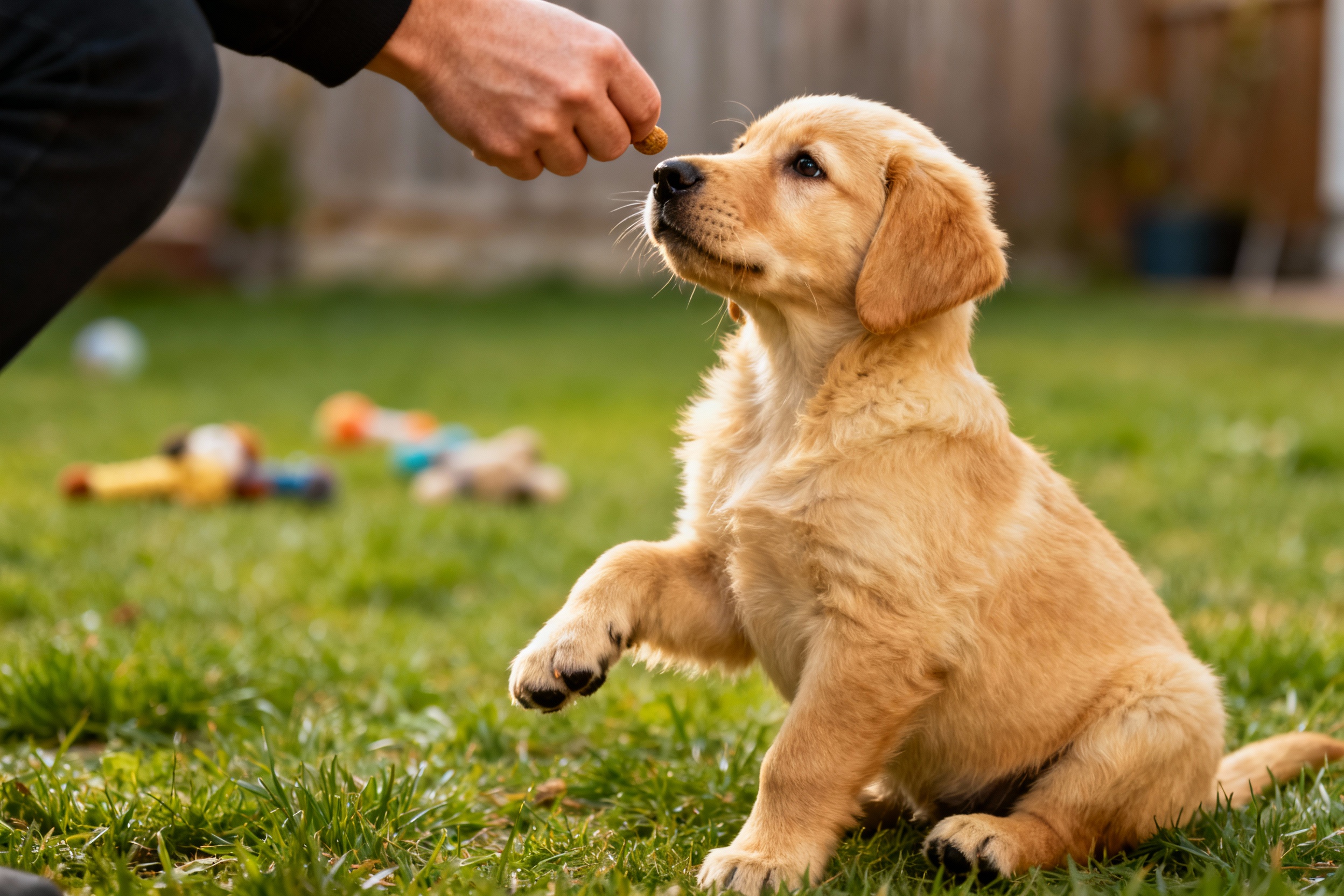
You just brought home an 8-week-old Lab puppy. Congratulations, and also… good luck. You now live with a food-motivated toddler in a fur coat who thinks your shoelaces are spaghetti.
The good news? Labradors want to please you, learn fast, and love routines. The even better news?
You can shape an awesome adult dog by starting now—like, today.
Set the Stage: Routine, Boundaries, and Puppy-Proofing
Puppies thrive on predictable rhythms. Create a daily schedule for meals, potty breaks, naps, training, and play. You’ll reduce chaos, whining, and “mystery puddles.” Before training anything fancy, puppy-proof your space. Hide cords, move shoes, and block rooms you can’t supervise.
If your puppy can reach it, they’ll mouth it—because Labrador.
- Crate: Right size so pup can stand, turn, and lie down. Cozy, not cavernous.
- Playpen: Great for safe downtime when you can’t watch every move.
- Chew station: A basket of safe chews beats table legs every time.
Sample Daily Rhythm
- Wake → Potty → Breakfast → Short training → Play → Nap
- Repeat cycles every 2–3 hours
- Dinner by early evening → Calmer play → Bedtime routine
Potty Training Without Tears (or Carpets)
House training at 8 weeks depends on management and timing. Your puppy can hold it for about one hour per month of age (so 2–3 hours, max).
Don’t push it. Take your puppy out:
- First thing in the morning and last thing at night
- After meals, naps, play sessions, and crate time
- Every 60–90 minutes while awake
When pup goes outside, praise and pay with a tiny treat right after they finish. Party like they discovered fire. Inside accident?
Clean with enzyme cleaner and move on. No scolding—your puppy won’t connect it.
Leash to the Potty Spot
Lead your puppy to the same yard spot. Say a cue like “Go potty” while they sniff.
Consistency builds the association fast.
Crate Training: Your Secret Weapon
Crates aren’t dog jail. They’re bedrooms. Use the crate to prevent mischief, build calm, and help potty training. How to make the crate awesome:
- Feed meals in the crate with the door open for a few days
- Toss treats in and let pup go in/out freely
- Add a safe chew (bully stick, frozen Kong) for short closed-door sessions
Start with 5–10 minutes while you’re nearby.
Gradually add time and distance. Ignore mild whining. If it escalates, wait for a pause, then let pup out.
You reward calm, not theatrics.
Night Strategy
Place the crate in your bedroom the first few weeks. A nearby human helps puppies settle. Set an alarm for one potty break if needed.
You’ll thank yourself in the morning.
Basic Cues That Matter Right Now
You don’t need obedience medals. You need real-life skills. Keep sessions around 3 minutes.
Stop while your puppy still wants more. Focus (Name Response)
- Say pup’s name → when they look, mark (“Yes!”) → treat
- Repeat everywhere, with gentle distractions
Sit
- Lure with a treat from nose up → as butt hits floor, “Yes!” → treat
- Use sit before meals, doors, and leashes. It’s a calm default.
Down
- From sit, lure to the floor; reward in position
- Keep it low-key and comfy, not a wrestling match
Come (Recall)
- Say “Puppy, come!” in a happy tone → run backward → “Yes!” → jackpot of treats
- Never use recall for something unpleasant. Recall = party.
Leave It
- Present treat in closed fist → pup sniffs/licks → wait → when they back off, “Yes!” → different treat from other hand
- Build toward floor items with a cover hand
Training Tools
- Soft treats: pea-sized, super tasty
- Clicker or verbal marker: “Yes!” for precision timing
- Flat collar or harness + 6’ leash: skip retractables
Socialization: The 8–12 Week Gold Window
This window shapes your Lab’s confidence for life.
Aim for gentle, positive exposure to sounds, surfaces, people, and scenarios. Don’t flood; just sprinkle. What to include:
- Men, women, kids (supervised), hats, beards, glasses
- Umbrellas, wheelchairs, skateboards, vacuum noise
- Car rides, vet waiting room “happy visits,” grooming touches
- Different ground textures: grass, gravel, wood, metal grates
Safety First
Until vaccines finish, stick to low-risk areas: your yard, friends’ yards with vaccinated dogs, reputable puppy classes. Carry your pup in high-traffic dog zones, IMO.
Bitey Shark Phase: Managing Nipping and Chewing
Labrador puppies explore the world with their teeth.
It’s normal. You’ll survive. When pup nips:
- Redirect to a chew toy immediately
- If biting persists, stand up and disengage for 10–20 seconds
- Re-engage when calm—teeth on toy = fun continues
Offer a rotation of safe chews: rubber toys, frozen Kongs, braided chews. Rotate daily so they stay exciting.
And yes, teething peaks around 4–6 months. Stock up now.
Teach “Drop It” Early
Trade up: present a better treat, say “Drop,” take the item, “Yes!,” give treat, then give the toy back sometimes. You’re not a thief; you’re a generous trader.
Trust matters.
Leash Manners Start Indoors
Forget long neighborhood treks at first. Build “walk near me” skills in the living room. Loose-Leash Foundations:
- Reward pup for being by your left side while you take a few steps
- Change direction often—be the most interesting thing on two legs
- Keep sessions short and upbeat
Once vaccines progress, explore quiet streets. If your Lab pulls, stop.
Become a tree. When leash slack returns, move again. Pup learns pulling = no progress.
Simple, not easy.
Food, Sleep, and Energy: The Behavior Triangle
A well-fed, well-rested Lab learns better. Tired puppies get bitey, zoomy, and dramatic. FYI, most 8-week-old pups sleep 16–18 hours per day.
Let naps happen. Feeding Tips:
- Choose a high-quality large-breed puppy formula
- Split meals into 3–4 feedings
- Use part of meals for training so you’re not over-treating
Exercise: Short bursts of play, sniffing games, and training. Skip long runs or stairs marathons. Their joints will thank you later, IMO.
Common Mistakes to Dodge
- Inconsistent rules: Couch today, banished tomorrow?
Pick a policy and stick to it.
- Overlong sessions: Tiny attention span. Keep it quick.
- Late socialization: The window doesn’t stay open.
- Too much freedom too soon: Use the crate and gates to prevent oopsies.
- Harsh corrections: Labs learn best with rewards and clear guidance.
FAQ
How long can my 8-week Lab stay in the crate?
Aim for 1–2 hours during the day, max, with plenty of potty breaks and play between. At night, most puppies can do a longer stretch, but set an alarm for a quick middle-of-the-night potty trip the first week or two.
When should I start puppy classes?
Right away.
Many reputable classes allow pups after the first round of vaccinations. Ask for a class that emphasizes positive reinforcement and controlled socialization, not chaotic free-for-alls.
What treats work best for training an 8-week-old?
Use tiny, soft, smelly treats—think pea-sized. Boiled chicken bits, soft training treats, or part of their kibble boosted with something tastier.
The higher the value, the faster the learning.
My puppy won’t stop biting. Is this normal?
Totally normal. Redirect to toys, manage arousal with short naps, and avoid rough wrestling games for now.
If biting escalates or targets faces/hands constantly, dial back stimulation and increase structured rest.
How much exercise is safe at this age?
Short, frequent play sessions and sniff-walks. Think 5–10 minutes of gentle activity several times a day, plus mental games. Avoid repetitive jumping, long hikes, or running beside bikes.
Growth plates need time.
When do Labs calm down?
Trick question. They mellow gradually, especially with training and enrichment. You’ll notice steadier behavior around 18–24 months, but good habits now make everything easier later.
Conclusion
Your 8-week-old Labrador sits at the sweetest crossroads—eager, sponge-brained, and goofy.
Build a routine, reward the wins, and stay consistent. You’ll guide that wiggly potato into a polite, confident companion—and have plenty of hilarious stories along the way. Keep sessions short, keep your pockets full of treats, and remember: today’s tiny reps become tomorrow’s awesome dog.
Leave a Reply