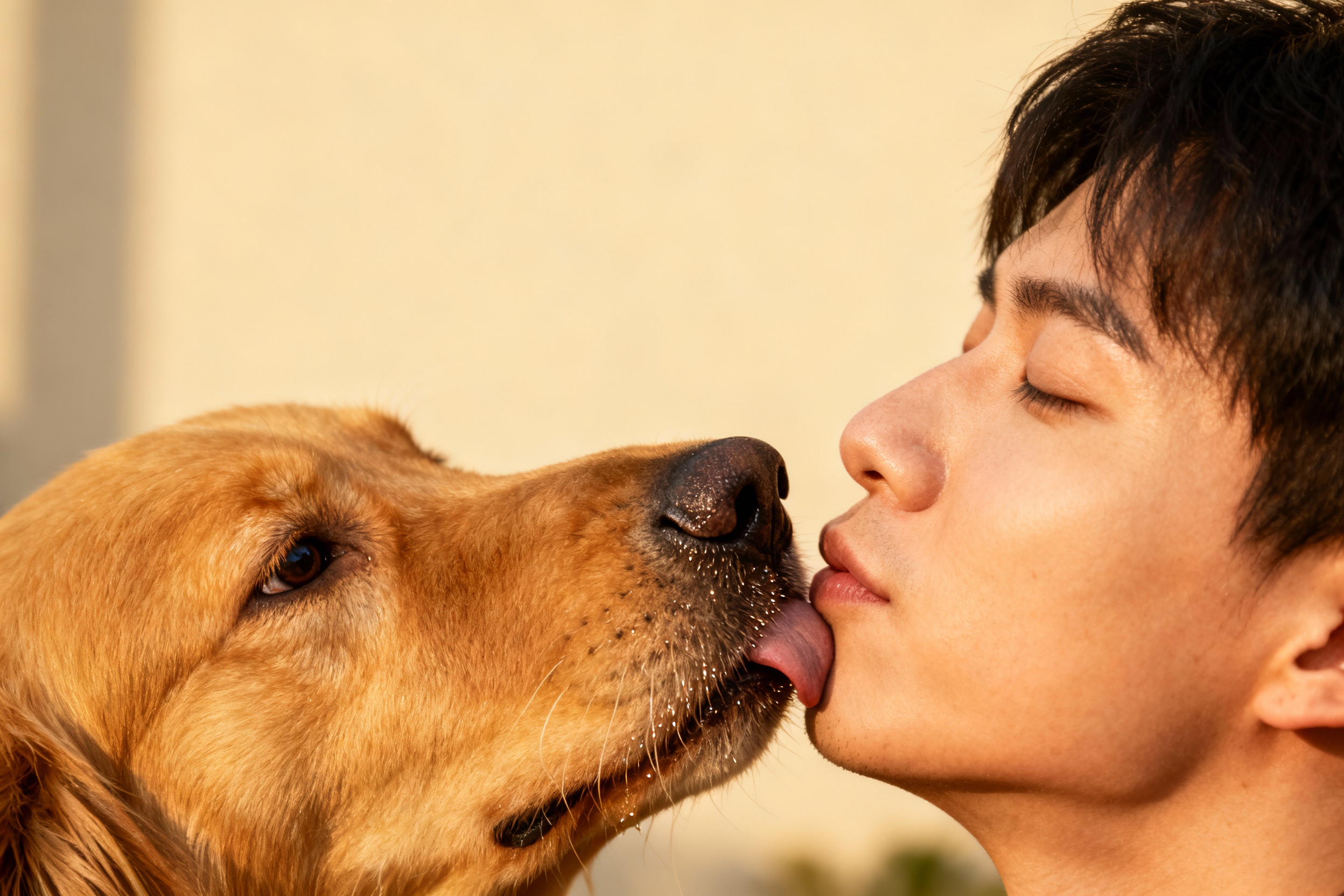
You know that moment when your dog sprints over, tail helicoptering, and plants a slobbery kiss right on your mouth? It feels like love. It also feels… mildly questionable.
Are dog kisses sweet affection or tiny hygiene grenades? Let’s unpack what those licks really mean—and whether you should let them land on your face.
Do Dog Kisses Mean “I Love You”?

Dogs don’t read poetry, but they do communicate with tongues. Licking shows affection, yes—but it can also mean a bunch of other things.
Puppies lick their moms for comfort. Adult dogs lick to bond, to soothe themselves, or to say, “Hey, you’re part of my pack.” Translation: When your dog licks you, they likely feel safe with you. They might also want your attention, your snacks, or both.
Love plays a big role, IMO, but it’s not the entire story.
Affection vs. Habit
Some dogs lick because you reward it—laughing, petting, giving treats. Others lick when they feel anxious, like a self-soothing tic.
If the licking ramps up when guests arrive or during storms, that’s not romance—that’s nerves.
The Myth of the “Clean Dog Mouth”
Let’s settle this fast: your dog’s mouth does not, in any universe, count as cleaner than yours. Different? Yes.
Cleaner? Hard no. Dogs carry bacteria suited to their species and their, uh, hobbies—like sniffing other dogs’ butts and sampling sidewalk mystery snacks. Key point: Most dog mouth bacteria won’t wreck a healthy human, but some can cause trouble.
Think:
- Capnocytophaga: Rare, but can cause serious infections in people with weak immune systems.
- Pasteurella: Common in dog mouths; can infect cuts and scrapes.
- Staph and strep: Yes, those can hitch a ride too.
FYI, if your dog enjoys grooming their, ahem, nether regions, you’ll also get a side order of gastrointestinal bacteria. Delicious.

Is It Safe to Let Dogs Lick Your Face?
Short answer: sometimes. Context matters.
If you’re healthy and your dog’s healthy, the risk stays relatively low. But it’s not zero, especially around eyes, nose, and mouth. Higher risk situations:
- You have cuts, chapped lips, cold sores, or acne lesions.
- You’re immunocompromised, pregnant, elderly, or very young.
- Your dog has dental disease, diarrhea, or eats raw meat.
Lower risk approach: Let your dog lick your hand or arm, then wash up. Save the face for selfies, not saliva.
What About Kids?
Kids touch everything, then touch their faces.
They also get sick more easily. If you have toddlers, set the rule: no face licks, period. Teach “kiss the dog on the chest or shoulder” instead of face-to-face contact.
Why Your Dog Targets Your Mouth
Your dog’s nose runs on gossip.
Your breath tells them what you ate, how stressed you feel, and whether you need a mint. They also learn that lick = laugh = attention. Dogs love a system that pays out every time. Pro tip: If you want fewer face kisses, stand up and turn your head away.
Reward calm behavior. You decide when affection happens, not your dog’s tongue.
Training a “No Face Licks” Policy
Try this simple routine:
- When your dog aims for your face, turn away without saying anything.
- Ask for a sit or down.
- Reward with a treat or chest scratch when they keep their tongue to themselves.
Consistency wins. So does keeping your mouth closed—learned that one the hard way.

Health Hygiene for Happier Kisses
You can make dog kisses safer without becoming a germ-phobe.
Start with your dog’s health. Do these, and your risk drops:
- Regular dental care: Brush several times a week. Use dog toothpaste only. Chews help, but brushing works best.
- Vet checkups: Yearly (or more for seniors) to catch gum disease, infections, parasites.
- Parasite control: Flea, tick, and internal parasite prevention.
Licking + parasites = nope.
- Diet sanity: If you feed raw, recognize a higher pathogen risk—especially Salmonella and Campylobacter.
For you:
- Wash hands before eating and after heavy cuddle sessions.
- Cover cuts and chapped lips. Lip balm helps create a barrier.
- Skip face licks if you’re sick or extra stressed (your immune system thanks you).
When Dog Kisses Mean Something Else

Licking doesn’t always equal “I love you.” Sometimes it’s your dog’s way of coping. Watch for these signs:
- Compulsive licking of surfaces, walls, or themselves can point to anxiety, GI issues, or allergies.
- Sudden lick attacks toward your face can mean over-arousal. Your dog needs a calmer greeting ritual.
- Bad breath, drooling, or bleeding gums signal dental problems that need a vet visit.
Red Flags You Shouldn’t Ignore
Call your vet if your dog’s licking comes with:
- Weight loss, vomiting, diarrhea, or decreased appetite.
- Obsessive paw or flank licking with hair loss.
- New irritability around the mouth or head.
Sometimes “kisses” hide discomfort.
Your dog isn’t being dramatic—they’re asking for help.
How to Channel the Love Without the Slobber
You don’t have to choose between affection and hygiene. You can have both—just design it. Try these swaps:
- Teach “kiss the hand.” Present your palm, mark with “yes,” reward. Cute, controlled, sanitary.
- Target a toy. Redirect licky energy to a tug or plush during greetings.
- Sniff walks and training games to meet their social and mental needs.
A tired brain licks less.
- Chest and shoulder kisses if you still want that sweet dog smooch vibe—just not on your lips.
Boundaries don’t kill the bond. They keep it sustainable, IMO.
FAQ
Can I get sick from a dog licking my face?
Yes, but the risk stays relatively low for healthy adults. The risk increases if you have cuts, a compromised immune system, or the dog has poor dental health or eats raw.
Avoid mouth, eyes, and nose contact to play it safer.
Do dogs lick because they taste salt?
Partly. Your skin tastes salty, and dogs enjoy that. But licking also brings comfort, attention, and info.
It’s a multi-purpose behavior—not just “mmm, human pretzel.”
Is my dog trying to “groom” me?
In a way, yes. Licking works as a bonding routine in social animals, and dogs extend that to their humans. It says, “We’re family,” even if you didn’t request the spa service.
Should I stop all licking?
Not necessarily.
Set boundaries where you need them—no face licks, for example—and allow brief licks on hands or arms if you’re comfortable. Pair it with good hygiene and regular vet care.
Why does my dog lick more when I come home?
Your arrival spikes excitement and stress relief hormones. Licking helps your dog cope and reconnect.
Teach a calmer greeting—sit for a treat, toy in mouth, then cuddles—to dial it down.
My dog’s breath is awful. What does that mean?
Bad breath usually signals dental disease, which hurts and spreads bacteria. Book a vet dental check, brush regularly, and use approved dental chews.
Chronic halitosis isn’t a personality trait.
The Bottom Line on Dog Kisses
Dog kisses can feel like love—and often they are. They’re also a delivery system for a microscopic party you didn’t invite. Set smart boundaries, keep your dog’s mouth healthy, and aim licks away from your face.
You’ll keep the bond strong, the vet happy, and your lips gloriously drool-free. That’s a win for everyone, especially your dignity.
Leave a Reply