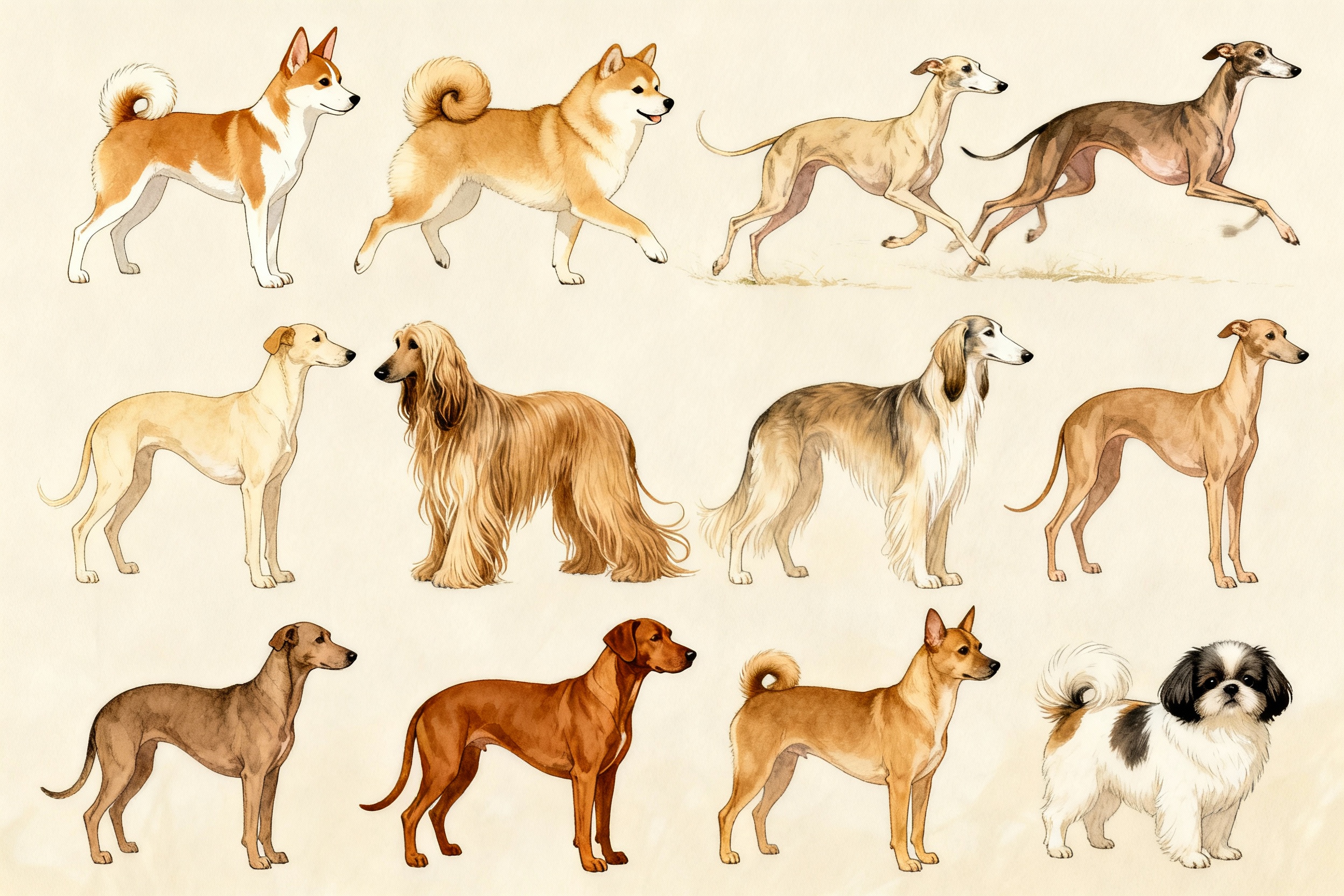
You love dogs, but your neighbors don’t love the noise? Or maybe you just crave a quiet buddy who won’t narrate every squirrel sighting. Good news: some breeds naturally keep their opinions to themselves.
They communicate, sure—but they don’t feel compelled to announce every leaf that blows by. Let’s talk about the top dog breeds that don’t bark much, why they’re like that, and how to live happily with a low-volume canine roommate.
What “Quiet” Really Means (Spoiler: Not Mute)

Let’s set expectations. Quiet breeds bark less; they don’t bark never. They still “talk” with sighs, huffs, and the occasional dramatic side-eye.
Some may howl or “roo” instead of barking. And if a quiet dog barks constantly? That’s a training or environment issue—not a breed guarantee.
Why some dogs don’t bark much
- Genetics and job history: Breeds created for sight-hunting or companionship didn’t need to bark nonstop.
- Temperament: Calm, independent dogs tend to vocalize less.
- Energy outlet: Mentally and physically satisfied dogs rarely feel the need to bark.
The Top 10 Dog Breeds That Don’t Bark (Much)
Here are the MVPs of the whisper league.
IMO, these breeds make excellent apartment buddies—if you meet their other needs.
- Basenji – The famous “barkless” dog. They yodel. Literally.
They’re smart, cat-like, and mischievous. Give them exercise and brain games and you’ll get a quiet, hilarious companion.
- Greyhound – Couch potato royalty. Sprints for five minutes, naps for five hours.
They’re calm, gentle, and usually reserved indoors.
- Whippet – Mini Greyhound energy with a stealth mode. Sensitive, sweet, and usually quiet. They need soft beds and warm sweaters more than megaphones.
- Borzoi – Elegant, aloof, and surprisingly low-key.
They watch more than they comment. They do need space and a secure yard (prey drive is real).
- Shiba Inu – You’ve heard the memes, but here’s the deal: they don’t bark much. They may scream when displeased (grooming, vet day), but day-to-day?
Pretty quiet.
- Cavalier King Charles Spaniel – People-pleasers who prefer cuddles over complaints. Proper socialization keeps their alert barking minimal.
- Chow Chow – Independent and dignified. They won’t narrate the mailman’s every move.
Training matters here—they can be stubborn.
- Bernese Mountain Dog – Gentle giants with a soft voice. They’ll alert when necessary but don’t yap for sport. They do shed like it’s their job, FYI.
- Chinese Shar-Pei – Reserved and thoughtful.
They keep the commentary short and purposeful. Consistent training keeps them confident and calm.
- French Bulldog – Comedians who snort more than they bark. They’re typically chill and people-focused, which keeps noise down.

Breeds That Stay Quiet for Different Reasons
Not all quiet dogs are the same.
Some stay quiet because they’re relaxed. Others because they’re independent or busy sniffing.
Quiet and cuddly
- Cavalier King Charles Spaniel – Velcro dog energy, minimal barking when well-socialized.
- Bernese Mountain Dog – Big love bugs who usually save their voice for real alerts.
Quiet and independent
- Basenji – Affectionate but not clingy; vocalizes in quirky ways.
- Chow Chow – Calm, dignified, and not easily rattled.
- Shar-Pei – Serious, loyal, and economical with noise.
Quiet and sporty
- Greyhound/Whippet/Borzoi – Sighthounds focus with their eyes, not their voices.
Training Tips to Keep the Volume Low
Even quiet breeds can learn bad habits. You can keep things serene with a few routines.
- Reward silence: Catch quiet moments and pay with treats or praise.
Yes, reward what you want more of.
- Teach “quiet” after “speak”: Let them bark once on cue, then reward when they stop on “quiet.” It gives you a volume knob.
- Exercise the brain and body: Bored dogs bark. Puzzle feeders, sniff walks, and short training bursts work wonders.
- Manage the triggers: Frosted window film, white noise, or a cozy crate can reduce visual and auditory triggers.
- Socialize smartly: Positive exposure to people, dogs, and sounds reduces anxiety-based barking.
What to avoid
- Yelling “no” – Sounds like you’re barking back. Dogs think it’s a duet.
- Shock or citronella collars – Can increase anxiety and create new problems.

Apartment-Friendly, Neighbor-Approved
Let’s talk living spaces.
Not every quiet dog fits every apartment, but many do beautifully.
- Best bets: Greyhound, Whippet, Basenji, French Bulldog, Cavalier.
- Maybe, with effort: Borzoi, Chow Chow, Shar-Pei (need training, space for exercise, and consistent routines).
- Big but chill: Bernese Mountain Dog can work if you handle stairs, shedding, and heat management.
Grooming and Care Notes (Because Quiet Doesn’t Mean Low-Maintenance)
Some of these quiet angels come with fine print. Choose with eyes wide open.
- High grooming: Bernese (shedding), Cavalier (ears/coat), Chow (coat), Borzoi (silky coat care).
- Moderate: French Bulldog (skin folds), Shar-Pei (skin), Shiba (seasonal blowout).
- Easy-ish: Greyhound/Whippet (wash-and-wear, watch for thin skin and temperature sensitivity).
Health FYI
- Brachycephalic breeds (Frenchie): Watch breathing, overheating, and exercise intensity.
- Large breeds (Bernese): Joint support, shorter exercise bursts, quality diet.
- Sighthounds: Sensitive to anesthesia; tell your vet.
Matching Your Lifestyle With a Quiet Breed
I’ll say it: energy and temperament matter more than decibel levels. Ask yourself:
- Do you want a sporty sprinter (Whippet), a dignified lounge lizard (Chow), or a velcro cuddle bug (Cavalier)?
- Can you handle shedding (Bernese) or grooming (Chow)?
- Do you enjoy training and enrichment (Basenji needs it, IMO)?
Adopt or shop responsibly
- Meet adult dogs to gauge actual vocal habits.
- Ask fosters about barking triggers and routines.
- Choose breeders who prioritize health, not just looks.
FAQ
Are Basenjis truly barkless?
They don’t bark in the traditional way, but they can yodel, whine, and make chirpy sounds.
They’re quiet compared to most breeds, but “silent” would be a stretch. They also have zoomies that should be sold as a premium streaming channel.
Which quiet breed is best for apartments?
Greyhounds and Whippets top the list for calm indoor behavior. French Bulldogs and Cavaliers also do great with moderate exercise. Basenjis can work in apartments if you provide mental stimulation and secure walks—escape artist tendencies are real.
Do quiet dogs still make good watchdogs?
Some do. Chow Chows, Shar-Peis, and Bernese will alert when it matters, but they don’t bark at everything.
If you want a living doorbell that only rings for legit reasons, these breeds make sense.
Can training make any dog quieter?
Yes—up to a point. You can reduce nuisance barking with training, enrichment, and management. But if a breed was developed to alert or herd, you’ll always see a higher ceiling on vocalization.
Pick your battles and your breed wisely.
Are sighthounds good with small pets?
Many have strong prey drive, so caution matters with cats and small animals. Some live peacefully with slow introductions and management, but never assume. Use leashes, gates, and controlled meet-and-greets.
What if my “quiet breed” barks a lot?
Check for triggers: boredom, lack of exercise, anxiety, or environmental stress.
Increase mental work, add structure, and teach a reliable “quiet.” If it persists, consult a qualified trainer or vet to rule out medical or behavioral issues.
Conclusion
Quiet dogs exist—and they’re awesome. From the yodeling Basenji to the sofa-surfing Greyhound, you can find a companion who keeps the vibes chill and the neighbors happy. Pick based on energy, temperament, and care needs first, then enjoy the sweet sound of almost-silence.
IMO, that’s the best kind of background noise.
Leave a Reply