
Your dog flops down, sighs dramatically, and covers his face with his paws like a tiny, furry celebrity hiding from paparazzi. Cute? Absolutely.
Mysterious? Also yes. So what’s really going on when your dog shields his face like he’s done with the world?
Let’s break down the reasons—some sweet, some practical, and a few that are just plain dog logic.
Comfort: The Cozy Paw Blanket Theory

Ever yank a blanket over your face to block light or just feel snug? Dogs do a version of that with their paws. Covering their face can make them feel safe, warm, and tucked in. Key clue: You’ll often see this during naps or bedtime.
It’s part self-soothing, part sleep ritual.
They’re Blocking Light or Drafts
If your dog snoozes in a bright room or near a vent, those paws work like blackout curtains. Not fancy, but effective.
They’re Settling In
Many dogs do a little routine before sleeping—circling, sighing, pawing. Face-covers can be one step in that comfort sequence.
IMO, it’s adorable.
Communication: “I’m Chill” or “Don’t Bug Me”
Dogs use body language constantly. A paw over the face can say, “I’m relaxed” or “I need a minute.” Context matters a ton here.
- Relaxed setting? It’s likely just a calm, content signal.
- Overwhelmed or shy? They might be avoiding eye contact or deflecting attention.
- After scolding? Some dogs cover their face in a “please stop” gesture. They’re not guilty—they’re uncomfortable.
Appeasement Signals
Dogs try to keep the peace.
A face-cover can join yawning, lip licking, and looking away as ways to say, “I come in peace.” FYI, if you notice a combo of those signals, your dog may feel stressed.
Itch, Scratch, Repeat: The Practical Reasons
Sometimes a paw to the face is just scratching an itch. Allergies, eye irritation, and even gunk around the muzzle can trigger that quick face-cover motion. Watch for these flags:
- Redness around the eyes or nose
- Tearing, discharge, or squinting
- Frequent pawing that looks urgent, not lazy
Allergies and Irritants
Seasonal allergies, dust, smoke, or a new carpet cleaner can make faces itchy. If your dog suddenly starts pawing a lot, ask yourself what changed recently.
Foreign Objects
A stray grass seed or a tiny eyelash can cause big drama.
If your dog can’t stop rubbing one eye, call your vet—eyes are delicate and things escalate fast.
Training History: Did You Accidentally Teach This?
Dogs repeat behaviors that get results. If your dog covered his face once and you squealed, laughed, and gave treats (guilty), congrats—you reinforced it.
- Attention-seeking: Dogs learn the cute moves that get us to look up from our phones.
- Tricks turned habits: If you taught “shy” or “peekaboo,” your dog might whip it out when bored.
How to Channel It
Turn it into a trick on cue. Reward only when you ask for it, and ignore it when you don’t.
You keep the adorable, you lose the constant face pawing. Win-win.

Stress, Anxiety, and Self-Soothing
Face-covering can double as a coping mechanism. Think of it like humans rubbing their temples during a long Zoom call. Common triggers:
- Loud noises (thunder, fireworks)
- New people or pets in the house
- Separation or big routine changes
If the pawing comes with pacing, whining, panting, or hiding, you might be looking at anxiety.
In that case, work on desensitization, offer a safe zone, and talk to your vet if it escalates.
Calming Strategies
– Create a cozy den (crate or corner) with soft bedding and a favorite toy. – Use enrichment: snuffle mats, puzzle feeders, lick mats. – Keep a predictable schedule. Dogs love a good routine. IMO, they handle change better than we do—when we help them.
Breed Traits and Face Shape Quirks
Some dogs are just built for face drama.
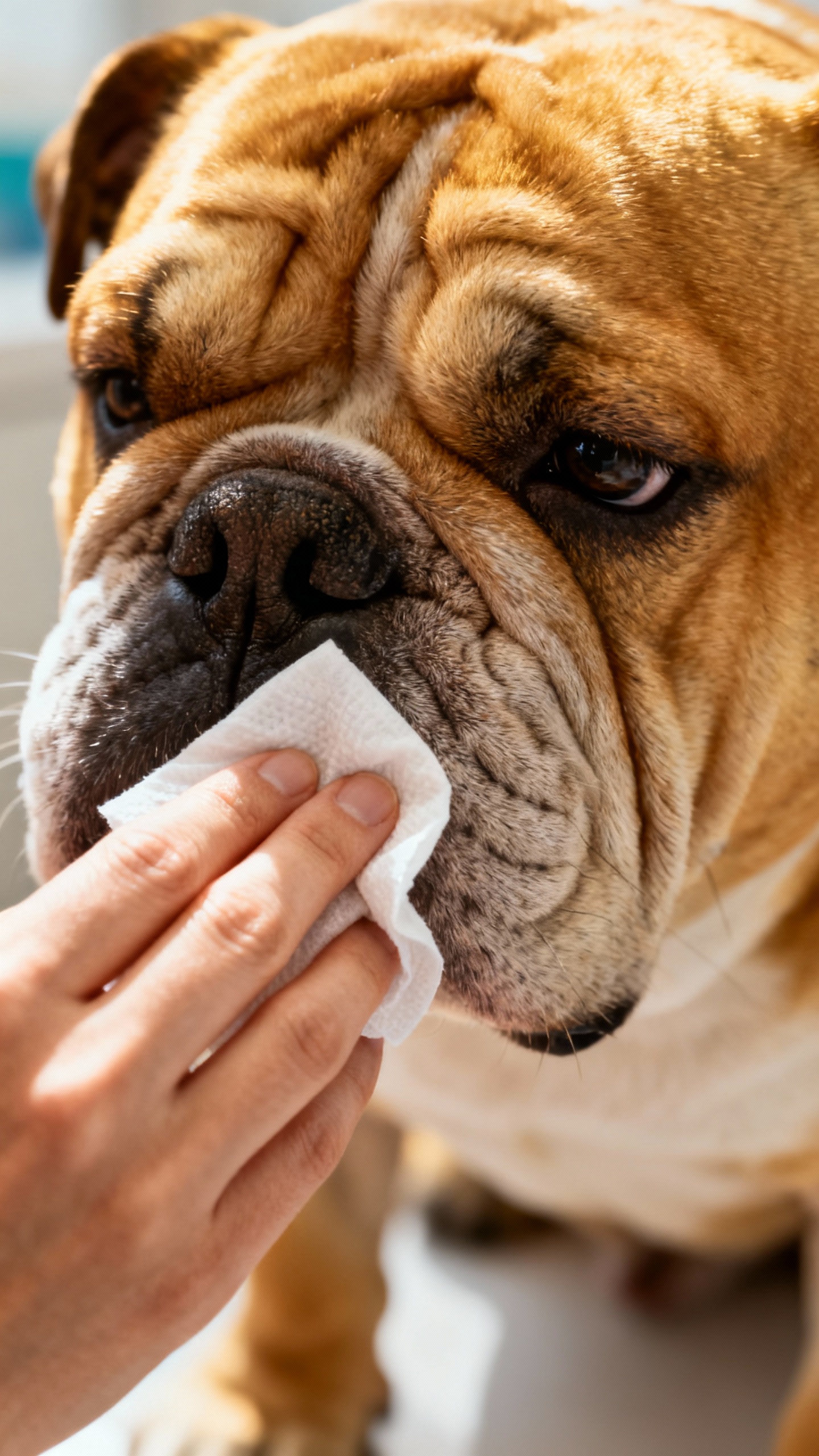
Brachycephalic breeds (pugs, bulldogs, boxers) have wrinkles that need regular cleaning, and they may paw more because things feel funky around those folds. Wrinkle care 101:
- Gently clean and dry folds a few times a week
- Use vet-approved wipes or solutions
- Check for redness or odor (signs of infection)
Hounds with long ears sometimes swipe at their faces to move those velvet pancakes out of the way. Respect the struggle.
When to Worry and Call the Vet
Most of the time, it’s nothing serious. But sometimes facial pawing screams “help.” Call your vet if you see:
- Persistent pawing at one eye or ear
- Swelling, redness, discharge, or foul odor
- Sudden behavior changes or head shaking
- Rash, hair loss, or scabs around the face
Quick action keeps minor issues from turning into big ones.
Eyes and ears don’t mess around.
How to Respond: Practical Tips
Let’s make this simple. Here’s what to do depending on the vibe you’re seeing.
- Chill nap pawing? Let it be. Snap a photo.
Post it. Live your life.
- Attention pawing? Ignore it calmly. Reward calm behavior instead.
Teach a cue if you want to capture it as a trick.
- Itchy pawing? Check eyes, nose, and folds. Wipe gently. If it persists, see the vet.
- Stress pawing? Reduce triggers, offer a safe space, and use enrichment.
Consider calming aids if your vet approves.
Helpful Tools
– Soft pet wipes for quick cleanups – Lick mats and puzzle feeders for mental work – A comfy bed in a low-traffic corner – A consistent routine (feeding, walks, play)
FAQs
Is my dog covering his face because he feels guilty?
Nope. Dogs don’t feel guilt the way we do. That “guilty look” is a submission or appeasement signal.
Your dog reads your tone and body language and tries to avoid conflict. It’s smart, not shame.
Why does my dog cover his face when I pet him?
He might feel overstimulated or just playful. Some dogs use their paws during affection like a “more please—no wait—yes more” kind of move.
If he seems tense, slow down or pet a different area (chest and shoulders usually work well).
Should I stop my dog from covering his face?
Not unless it causes problems. If it’s cute and relaxed, enjoy it. If it’s constant, intense, or paired with signs of irritation or anxiety, address the cause and check with your vet.
Why does my dog paw at his face after eating?
Crumbs, water drips, or sticky food can bother them.
Wipe your dog’s muzzle after meals, especially if they have beards, wrinkles, or long fur. It’s basically a canine napkin.
Could this be a sign of pain?
It can. Dental pain, ear infections, or eye issues often lead to face pawing.
If your dog shows other signs—drooling, bad breath, head tilts, or reluctance to chew—book a vet visit.
Do puppies do this more?
Yes. Puppies explore with their paws and mimic behaviors that get attention. As they mature, the behavior usually settles into a context—comfort, communication, or a learned trick.
Bottom Line
Your dog covers his face with his paws for a handful of totally normal reasons: comfort, communication, itch relief, learned behavior, or mild stress.
Read the context, check for physical issues, and respond accordingly. Most of the time, it’s a cozy, harmless quirk—one that also happens to be insanely cute, FYI. And if something seems off, trust your gut and call your vet.
IMO, your dog’s dramatic little paws are telling you a story—you just need to listen.
Leave a Reply