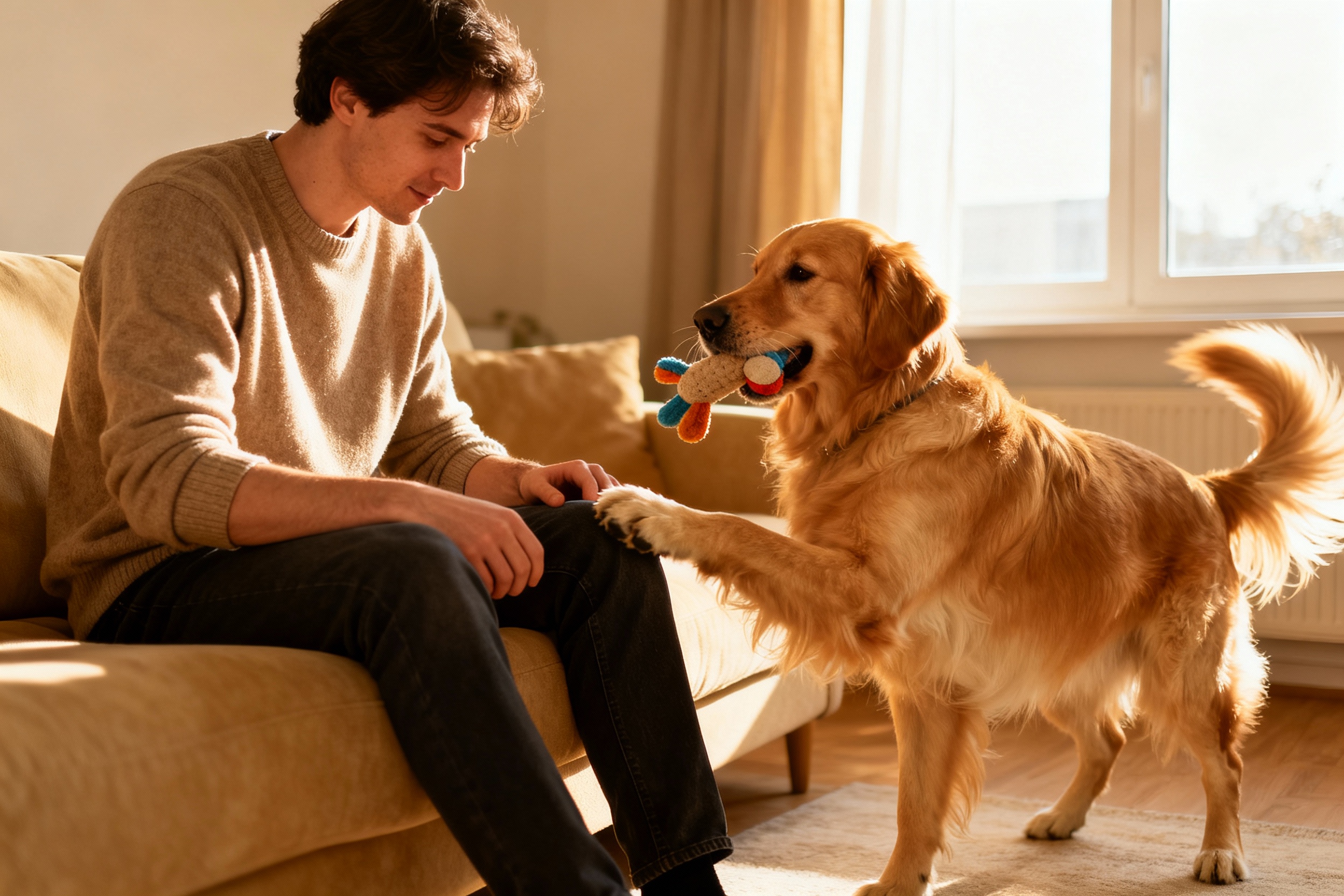
Your dog plants a paw on your arm. Then another. Then a full-on double high-five to the face.
Cute? Absolutely. Confusing?
Also yes. If your pup keeps pawing at you like you’re a human vending machine, they’re trying to tell you something—sometimes sweet, sometimes urgent, and sometimes… manipulative. Let’s decode those toe beans.
They Want Your Attention (And They Know How to Get It)

Dogs learn fast.
If pawing gets you to look at them, talk to them, or hand over a treat, they file that away as “works every time.” You reinforced it, even if by accident. What it looks like: They stare, paw, then wag when you react. It’s a loop. What to do:
- Ignore the paw for a few seconds. Look away, fold your arms, wait for calm.
- Reward calm behavior instead.
When they sit or lie down quietly, give attention.
- Teach an “ask” behavior like a sit by the door or a chin rest on your knee.
Pro tip: Give attention on your schedule
Schedule short play or training sessions throughout the day. If your dog knows attention is coming, they paw less like a tiny furry boss.
They’re Saying “I’m Anxious” or “I Need Comfort”
Pawing can mean stress, especially during storms, fireworks, or new environments. Think of it as a canine “please don’t leave me.” Signs it’s anxiety:
- Pacing, whining, lip licking
- Clinginess or shadowing you room to room
- Shaking or pinned ears
How to help:
- Create a safe spot with a bed, chew, and white noise.
- Practice calm routines like mat training and slow breathing with gentle petting.
- Use enrichment (snuffle mats, puzzle feeders) to drain nervous energy.
When to loop in a pro
If anxiety feels chronic or intense, chat with a trainer or vet.
Behavior meds or a desensitization plan can be a game-changer, IMO.

They Need Something Specific (And You Are The Opposable Thumbs)
Sometimes pawing means “open the door” or “my water bowl is suspiciously empty.” Dogs use paws like a ping to get the task handled. Run a quick checklist:
- Water: Is the bowl fresh and full?
- Potty break: When was the last one?
- Hunger: Are you past mealtime or did you cut portions?
- Temperature: Are they hot, cold, or restless?
Teach a clearer signal
Replace random pawing with a “touch” cue to a bell by the door, or a “sit and look” policy before you open anything. You’ll thank yourself at 2 a.m.
It’s Playtime, Obviously
Pawing is a classic play invite, especially with pawsier breeds (hey, Boxers). It can come with zoomies, play bows, and open-mouth smiles. Channel the energy:
- Start a structured game: tug with rules, fetch, or hide-and-seek.
- Use training games: 5-minute trick sessions burn brain energy fast.
- End play with a calm cue like “all done,” then a scatter of kibble to sniff out.
FYI: Consistent off-switch
If your dog struggles to settle after play, build a routine: play → cue “all done” → mat/bed → chew toy.
Repeat daily. Dogs love rituals (same).

Affection and Bonding (The Wholesome Option)
Sometimes your dog just feels mushy. Pawing can be the dog version of a hand on your shoulder.
If it’s gentle and relaxed, enjoy it. Signs it’s affection:
- Soft eyes, slow blinks
- Loose body, relaxed ears
- Happy sighs (you know the ones)
How to respond: Give a calm pet, speak softly, and keep the moment short and sweet. You can still set boundaries if they escalate—affection shouldn’t turn into a face-slap session.
Health Issues Can Drive Pawing, Too

When something hurts or feels weird, dogs seek help. Pawing can be their SOS if they can’t settle or they keep targeting a body area. Red flags to watch:
- Restlessness at night
- Obsessive paw licking or limping
- Sudden clinginess paired with whining
- Changes in appetite, thirst, or bathroom habits
Possible culprits:
- Pain: arthritis, sprains, dental pain
- Skin issues: allergies, hot spots, parasites
- GI upset: nausea can cause clingy behavior
What to do: If pawing feels new, intense, or comes with other symptoms, call your vet.
Better a quick check than a missed issue, IMO.
Accidental Training: How You (Lovingly) Created a Paw Monster
You laughed at the first paw. You gave a treat at the second. Now your dog is an expert negotiator.
It’s okay. We can fix it. Reset the pattern:
- Decide the rule: No attention for pawing, only for calm sits.
- Be consistent: Everyone in the household follows it.
- Reward alternatives fast: The moment they sit or lie down, praise and treat.
- Add a cue: Teach “paws off” or “settle” with a mat.
- Provide outlets: Walks, sniffing, training, and chews = fewer paw campaigns.
Timing is everything
If you cave after 30 seconds of pawing, your dog learns to paw for 31 seconds next time. Hold firm.
Reinforce only the behavior you want.
When Pawing Turns Pushy or Rough
Some dogs escalate to scratching or jumping. Cute puppy paw turns into accidental exfoliation. Set boundaries kindly but clearly. Teach “four on the floor”:
- Step back the moment paws leave the ground; step forward and reward when all four feet land.
- Ask for a sit before greetings.
No sit, no hello.
- Use a leash at the door to prevent chaos while you train.
For kids and guests
Use baby gates or tethers during visits. Coach guests to greet only when your dog sits. Protect those forearms.
FAQs
Is pawing a sign of dominance?
Nope.
Most pawing is learned behavior or a simple request for attention, comfort, or play. Dominance myths cause more confusion than clarity. Focus on clear rules, consistency, and meeting your dog’s needs.
Why does my dog paw at me when I stop petting?
You taught a “continue petting” button without realizing it.
Pause, wait for calm, then resume petting for a few seconds. Repeat until they learn that patience pays, pawing doesn’t.
My dog paws only at night. What gives?
Night pawing often points to unmet needs or discomfort.
Check water, bathroom breaks, temperature, and pain. Consider a calm evening routine: light play, sniffy walk, chew, then bedtime in a comfy spot.
Should I ever reward pawing?
You can—if you asked for it. Teach a “shake” or “high-five” on cue, and reward only when cued.
Off-cue pawing gets nothing. Clear lines help your dog understand the rules.
What if my senior dog suddenly starts pawing?
Sudden changes in older dogs deserve a vet visit. Pain, cognitive changes, vision/hearing shifts, or anxiety can trigger clingy behaviors.
Early support helps everyone sleep better.
The Bottom Line
Your dog isn’t being weird for fun (well… sometimes). Pawing usually means they want attention, comfort, play, or help with a need—and it worked before. Decide what you want instead, reward that like crazy, and ignore the paw campaigns.
Keep an eye out for anxiety or pain, and loop in a pro if things feel off. You’ve got this—and so does your very enthusiastic paw ambassador.
Leave a Reply