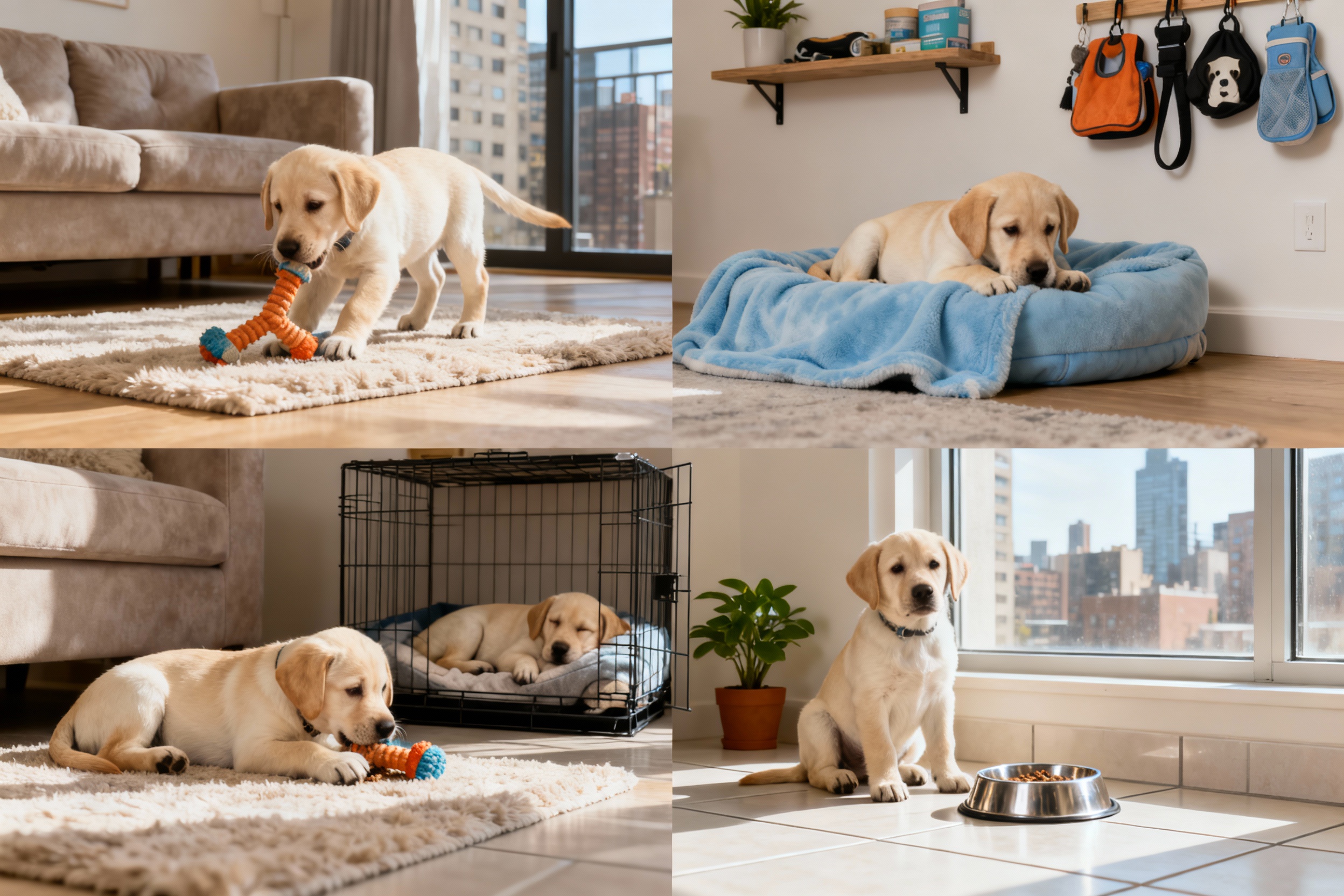
You brought home a Labrador puppy… and you live in an apartment. Brave. Also completely doable.
Labs thrive with people who give them structure, exercise, and affection—yes, even in small spaces. The trick? Work smarter, not bigger.
Let’s turn your little place into Labrador HQ without losing your mind (or your security deposit).
Know Your Roommate: The Labrador Personality
Labs are social butterflies with an athlete’s engine. They love humans, they love food, and they love doing things—preferably with you. That combo rocks in apartments if you plan for it. What to expect:
- Energy bursts: Zoomies happen.
Plan outlets or your coffee table will suffer.
- Chew phase: Everything looks biteable. Manage, don’t rage.
- Velcro vibes: Labs stick close. Great for bonding, tricky for alone-time training.
Apartment Reality Check
Ask yourself:
- Can you do 3-4 outings a day, including one decent walk?
- Are you cool teaching quiet manners for neighbors?
- Do you have time for training daily? (Even 10 minutes makes a difference.)
FYI: If you can commit, a Lab fits apartment life just fine.
Set Up a Puppy-Proof Home Base
Your puppy needs a chill zone.
Think safe, cozy, and boring (in a good way). Non-negotiables:
- Crate + playpen combo: Use the crate for sleep and the pen for hangouts. It protects your stuff and keeps your puppy from learning bad habits.
- Chew buffet: Offer 4-6 varied chews and rotate them. Include rubber toys, rope, and long-lasting chews to keep that mouth busy.
- Floor plan: Block off bedrooms and kitchen early on.
Open access equals sneaky accidents.
- Potty cleanup kit: Enzymatic cleaner, paper towels, and pee pads (for emergencies). Stash them where you can reach fast.
Noise-Proofing for Neighbors
Cover the crate with a light blanket for nap cues. Add a white noise machine or fan.
Reward silence generously. You’re raising a calm dog, not a hallway alarm system.
Potty Training Without a Backyard
Consistency beats square footage. You just need a plan and shoes by the door. Weekly game plan:
- Take them out after waking, after meals, after play, and every 2-3 hours.
- Use the same spot outside, same phrase (“go potty”), and wait quietly.
- Celebrate wins with praise and a small treat immediately after they finish.
- Supervise indoors.
If you can’t watch, crate or pen.
Balcony Grass Pads: Yay or Nay?
If your building allows it, a grass pad on a balcony can save your sanity during rainy nights. But still build the outdoor habit or you’ll get a stubborn “indoors only” preference. IMO, use it as a backup, not the default.
Exercise: Quality Over Square Footage
A tired Lab = a good Lab.
But don’t overdo high-impact stuff while those joints grow. Daily rhythm that works:
- Morning: 20-30 minutes of sniffy walk + 5 minutes of training.
- Midday: Short toilet break + play or a food puzzle.
- Afternoon: 10-15 minutes of fetch in a hallway or quiet park.
- Evening: Another sniffy walk + calm chew time.
Low-Impact Apartment Activities
- Sniff work: Scatter kibble on a snuffle mat. Nose work tires brains fast.
- Hide-and-seek: You hide, they find you. Cue “Come!” for bonus recall points.
- Shaping games: Reward small steps toward tasks like “touch,” “go to mat,” or “pick up toy.”
- Puzzle feeders: Kongs, lick mats, slow bowls—make meals last.
FYI: Avoid repeated stair sprints and long runs until your vet clears those growing joints.
Training Essentials for Close Quarters
You need manners that make apartment living easy.
Start now, make it fun, keep reps short. Skills to prioritize:
- Crate love: Feed meals in the crate. Toss treats inside randomly. It becomes a safe den, not puppy jail.
- Quiet cue: Reward silence after a knock or hallway noise.
Ignore barking, reinforce calm.
- Settle on a mat: Teach “place” with treats. It’s your dinner-time and Zoom-call savior.
- Loose-leash walking: 3-5 minutes daily in the hallway before tackling busy streets.
- Drop it/Leave it: Labs hoover everything. These cues prevent emergency vet visits and shoe funerals.
Alone-Time Independence
Practice micro-absences.
Step out for 2 minutes, return calmly, increase slowly. Pair with a stuffed Kong. The goal: your pup naps instead of freaks when you leave.
Socialization Without Chaos
You want confident, chill vibes, not a barky tornado.
Expose your puppy to normal city life in bite-sized doses. Smart socialization list:
- Elevators, stairwells, parking garages
- Different floor textures: tile, wood, carpet, grates
- People with hats, umbrellas, wheelchairs, strollers
- Traffic sounds, sirens, bikes, scooters
- Friendly, vaccinated dogs—one at a time, not a dog-park mosh pit
Keep sessions short and sweet. One new thing at a time, lots of treats, zero pressure. If your puppy hesitates, create space and go slower.
Confidence builds with choice.
Chewing, Biting, and Your Furniture’s Survival
Puppies chew because teething hurts and chewing feels awesome. Direct that chaos. House rules that work:
- Trade, don’t chase: Offer a high-value treat to swap for the contraband.
- Rotate chew options: Novelty keeps interest high.
- Preempt the crime: Before Zoom meetings, hand over a stuffed Kong to keep the mouth busy.
- Bitey greetings: Freeze, disengage for 3 seconds, then resume play calmly. Consistency teaches gentle mouths.
DIY Cheap Enrichment
- Muffin tin + tennis balls over treats
- Cardboard box shredding station (supervised)
- Frozen broth cubes for hot days
Cheap, fun, and destructive in a controlled way.
Win-win.
Feeding, Routine, and Health Basics
Routine equals fewer messes and better behavior. Your dog loves predictability almost as much as snacks. Daily rhythm (sample):
- 7:00 Wake, potty, breakfast, short walk
- 9:30 Nap in crate
- 12:00 Potty, training/play, lunch or stuffed Kong
- 3:00 Nap
- 5:30 Walk, dinner
- 8:30 Calm play/chew, last potty
Health and grooming musts:
- Vet schedule: Vaccines, deworming, flea/tick prevention. Ask about hip/elbow screening later.
- Nails: Trim weekly.
Short nails = fewer slips on hardwood.
- Ears: Clean weekly. Labs love moisture; yeast loves Labs.
- Weight: Keep them lean. Extra pounds hurt joints, especially in apartments with stairs.
Community Hacks for Apartment Living
You don’t need a yard—you need a network. Make life easier:
- Find a local dog walker for midday breaks when work gets hectic.
- Scout quiet walking routes for focused training sessions.
- Join a positive-reinforcement puppy class.
Socialization + coaching = fewer future headaches.
- Dog-friendly errands: Pet-friendly stores double as training grounds on rainy days.
IMO, investing in a few walks or classes early saves your sanity later.
FAQ
How much exercise does a Lab puppy need in an apartment?
Aim for several short sessions: two or three 15-30 minute walks, plus mental work like training and puzzles. Keep it low-impact while joints develop. Tired brain > exhausted body at this age.
Can I leave my Lab puppy alone while I work?
Yes, with planning.
Use a crate and pen, arrange a midday potty break, and practice alone-time from day one. Start with minutes, build to hours, and always leave a safe chew or food puzzle.
Will a Lab bark too much for apartments?
Labs don’t typically bark nonstop, but boredom and hallway noise can trigger it. Teach a strong “settle,” reward quiet after knocks, and manage sound with white noise.
Exercise and enrichment reduce nuisance barking massively.
What’s the best way to handle teething?
Offer a rotation of cold or textured chews, supervise closely, and use trades. Redirect early so chewing becomes a “these items only” habit. Teething peaks around 4-6 months—hang in there.
Do I need special gear for small-space training?
A crate, playpen, flat collar or harness, 6-foot leash, treat pouch, and a few puzzle toys cover it.
Add a snuffle mat and lick mat for quiet mental work. Keep it simple and consistent.
When can my puppy start using stairs regularly?
Light, controlled stair use is fine, but avoid long stair sessions and racing until your vet okays joint development. Use a harness and go slow—no parkour yet.
Conclusion
Raising a Labrador in an apartment isn’t about square footage—it’s about structure, enrichment, and your relationship.
Build routines, channel that energy, and teach calm as a skill. You’ll end up with a happy, adaptable dog who can chill on the couch and crush weekend adventures. And hey, your coffee table might even survive.
Leave a Reply